

Showing posts with label recreational diving. Show all posts
Showing posts with label recreational diving. Show all posts
Thursday, January 17, 2013

Thursday, January 10, 2013
Wednesday, June 27, 2012
Immersed Senses

Improving the limitations of current scuba diving system, designer Adam Wendel has come up with a futuristic device named the “Immersed Senses” that changes the way the diver sees, hears, and breathes underwater, allowing them to become a part of their surrounding environment. Immersed Senses is the future of underwater diving and exploration. Featuring a LED flashlight to let the diver to observe the dark depths of the ocean, the mask also includes a large OLED glass display to offer a panoramic view of the surroundings. The OLED enclosed helmet also allows the extracted oxygen to flow freely throughout the helmet, as if you are breathing on land without any breathing apparatus.

While an interactive OLED display gives access to underwater GPS maps, therefore allowing the diver to navigate efficiently throughout the ocean’s landscapes. The OLED also offers software that can identify all species of fish, coral and other ocean dwelling creatures that diver is currently viewing. With Immersed Senses, experiencing the underwater world is now fully interactive. In addition, the OLED screen depicts important info such as oxygen toxicity, nitrogen levels and even body heat to keep the diver well informed and safe.
Made in haptic glass, the device concept touts futuristic technology to the core. An optically clear glass with microscopic pours keeps water molecules out, yet it allows sound waves to pass through. Sound travels six times faster underwater than on land, however it is nearly impossible to interpret where the sound is coming from. The haptic glass interprets the sound wave orientation then displays the source and direction on the OLED display.
Water leakage is eliminated with the use of a silicone lining that seals the helmet to the skin. The silicone’s flexibility affords the diver to explore with comfortable movements. The orange side panels assist in internal circulation of the extracted oxygen. The rear of the helmet contains an electrolysis reactor that extracts oxygen from saltwater. The breathable oxygen is circulated throughout the helmet, creating a revolutionary underwater breathing experience.
Immersed Senses operates by a battery that utilizes a centrifuge mechanism to pull oxygen from seawater that begins the electrolysis reaction. Saltwater is extracted into the bottom reservoir that reacts with hydrogen gas. The saltwater is then charged by a positive and negative anode/cathode that generates breathable oxygen. Two internal devices help to circulate the oxygen to the diver’s mouth and nose.
The diver then breathes in the oxygen and out carbon dioxide, which exits the helmet. The battery and stored hydrogen can keep a diver submersed for up to 8 hours. The Immersed Senses revolutionizes how a human can breathe underwater, as well as interact with the OLED display offering a panoramic view of the deep sea.
Made in haptic glass, the device concept touts futuristic technology to the core. An optically clear glass with microscopic pours keeps water molecules out, yet it allows sound waves to pass through. Sound travels six times faster underwater than on land, however it is nearly impossible to interpret where the sound is coming from. The haptic glass interprets the sound wave orientation then displays the source and direction on the OLED display.
Water leakage is eliminated with the use of a silicone lining that seals the helmet to the skin. The silicone’s flexibility affords the diver to explore with comfortable movements. The orange side panels assist in internal circulation of the extracted oxygen. The rear of the helmet contains an electrolysis reactor that extracts oxygen from saltwater. The breathable oxygen is circulated throughout the helmet, creating a revolutionary underwater breathing experience.
Immersed Senses operates by a battery that utilizes a centrifuge mechanism to pull oxygen from seawater that begins the electrolysis reaction. Saltwater is extracted into the bottom reservoir that reacts with hydrogen gas. The saltwater is then charged by a positive and negative anode/cathode that generates breathable oxygen. Two internal devices help to circulate the oxygen to the diver’s mouth and nose.
The diver then breathes in the oxygen and out carbon dioxide, which exits the helmet. The battery and stored hydrogen can keep a diver submersed for up to 8 hours. The Immersed Senses revolutionizes how a human can breathe underwater, as well as interact with the OLED display offering a panoramic view of the deep sea.
Dubai's Planned Underwater Hotel

Dubai shipbuilder Drydocks World has signed on with Switzerland’s BIG InvestConsult, on behalf of partner Deep Ocean Technology (DOT), to become the sole construction contractor of the futuristic Water Discus Underwater Hotels in the Middle East. Tailored to the luxurious lifestyle, aspiring divers and marine life enthusiasts, the patent-protected concept by DOT is comprised of disc-shaped volumes that are both above and below the water’s surface, exploring the depths of the ocean while taking advantage of the warm climate.

The single water discus module works as an independent structure, with the possibility of joining other modules to create a larger resort complex. Each module consists of two discs; one disc is submerged ten-meters underwater and the other floats five to seven-meters above the sea’s surface. Both parts are connected by three structural “legs” and a vertical shaft containing a lift and stairway.

Enormous panes of glass frame the vibrant sea life within each of the twenty-one private rooms, located in the underwater disc. A special lighting system is integrated within each room, allowing visitors to illuminate the water world and view the sea creatures. Adjacent to these rooms is an underwater dive center and a fully stocked bar.

The above-water disc is comprised of a restaurant, spa, a special recreation area and a multifunctional lobby that is built inside an enormous swimming pool. The swimming pool can be accessed by the roof, along with a rooftop garden and the helicopter pad.

The safety of the occupants is placed at high priority. The structure is designed to withstand the most adverse weather conditions. And, in the event of any danger, the underwater disc will automatically surface. However, one must question the safety of the marine life if this hotel is constructed. DOT highlighted the fact that each disc is sized according to the local condition and has the ability to be relocated if “any changes in the environmental or economic conditions occur”.


Technology: Lech Rowinski (Technical University of Gdansk)
CEO: Arkadiusz Majerski
CFO: Jacek Zdrojewski
Company’s Development : Grzegorz Malenczuk
Architecture: Pawel Podwojewski
Executive Creative Director: Pawel Podwojewski
3D Artist: Dimitriy Belozertsev at MOTYW
Reference: Deep Ocean Technology, World Architecture News
Monday, June 11, 2012
Sexy Diver - Jessica Alba

Do you want to be a sexy diver? Need to get fit? Now we have the reason why Jessica Alba looks like this. So how can you become the next Jessica Alba thanks to Scuba Diving…
Think of the amount of calories you loose while scuba diving.
Here we go:
Shapely legs: Swimming with fins (flippers) is like water-based weight-training – firming the front of the thighs as you kick down and the back of the thighs as you kick up. 4 stars
Weight loss: Surprisingly good for burning energy. Someone weighing approximately 70kg (11st) burns 13 calories a minute while scuba diving, so a 45-minute dive would use 585 calories. 3 stars
Cardiorespiratory fitness: According to the British Thoracic Society, scuba divers tend to have larger-than-average lungs and an increased vital capacity (the maximum volume of air exhaled after inhalation). 4 stars
Upper-body strength: The back, shoulders and arms get a certain amount of work lugging around equipment, but once in the water, the upper body gets off lightly. Arms are usually folded across the chest or kept by the sides. 2 stars
Convenience: Even if you decide to dive in the Australia, it’s still an equipment-heavy, location-specific, expensive sport that requires a licence, and therefore tuition. 1 star
Friday, June 8, 2012
I can SEA clearly now


Paul Watson, the founder of Sea Shepherd Marine Wildlife Conservation Society has been released. He was bailed from a Frankfurt jail pending a decision on whether he will be extradited to Costa Rica, where he is wanted for supposedly endangering a Costa Rican fishing vessel whilst filming a documentary back in 2002.
On Friday (18th) a Frankfurt court ruled that he could be released on bail for around £200,000. A mystery donor stepped in and he was released on Monday (20th).The Captain was relieved to be out, “I didn't expect something that happened 10 years ago to sneak up on me in Germany.”
Watson must remain in Germany while the extradition case gets haggled over.
Luckily for Paul the Costa Rican President Laura Chinchilla was in Germany on an official visit trying to drum up more foreign investment from Chancellor Angela Merkel. By the time she had arrived in Berlin more than 400 Sea Shepherd supporters had shown up to greet her.
Sea Shepherd called for a global day of action on Wednesday (23rd) asking people to go and stand outside German Embassies and protest. Demonstrations took place outside the German embassies and consulates in Hong Kong, Australia, Canada, US, South Africa, Brazil, Spain, Costa Rica and many other countries.
Keep checking SEA SHEPHERD website for news and updates.
Packing Tips for Photographers

It used to be so easy to get to distant dive locations with virtually any amount of camera gear needed to do the job. Load up a dive bag, a clothing bag, maybe a big roller case for topside cameras to go on the airplane with you--then stuff the rest in a giant hard case. Some shooters had different strategies, maybe an Igloo cooler with the lid duct-taped down to make it look like a cargo of dead fish rather than live cameras, hoping to avoid theft. But the common feeling was that overweight was an after-thought, and if we got charged at all, it would be maybe $50. But as Mr. Dylan once sang, "the times they are a-changin'," and as fuel costs force airlines' bottom lines deeper into the red, they pass some of those costs along to their passengers in the form of baggage fees. Underwater photographers get hit especially hard, so for shooters feeling the pinch, here are five tips for packing, planning and navigating baggage restrictions on your next dive trip.
1) Check the Airline's Specific Baggage Limitations
To emphasize how significantly times have changed, I just came home from an otherwise terrific trip to the Red Sea. To get there, I went via London on an international carrier, which wasn't overly restrictive. But I connected with a charter flight to Marsa Alam, Egypt--low-cost charter flights with few amenities are a common choice for divers traveling from Europe--and that carrier was extremely restrictive in its baggage allowance, with astronomical overweight charges. What's the lesson here? Know what you're in for ahead of time. Domestic U.S. flights, which may include flights to the Caribbean and Mexico, international flights and charter flights often have different baggage allowances and fees. For each carrier you're ticketed with, check the web site for updated information about baggage allowances and fees for the type of flight you're on so you can pack and budget according to the most restrictive leg of your trip.
2) Budget for Overweight Charges
The overweight charge on my charter flight to Marsa Alam was about $6.81 per pound. Each passenger was allowed 55 pounds for the combination of dive gear, clothing and camera equipment. Normally I travel with two 60-pound cases, one hard case for housings and strobes and one dive bag for gear and clothing. That's 120 pounds, and then I have a wheeled carry-on case for my topside cameras that weighs another 40 pounds. If I traveled as normal, I'd have been 105 pounds overweight, paying $715 in overweight fees, each way. Sometimes, you'll get lucky. Going to Marsa Alam, I didn't get charged any fees, but I took that to be luck-of-the-draw in getting a generous gate agent because other travelers with the same amount of baggage or less got thoroughly hammered. On my return flight, I got one particularly strict baggage inspector who hit me with $600 in overweight charges. Pack and weigh your bags well ahead of time, and do the math to figure out the maximum cost in fees you may incur. Then budget this amount into the cost of your trip to avoid spending more than you planned. A handy little travel tool is Balanzza--balanzza.com--a lightweight digital scale that will tell you exactly what your bags weigh, in pounds or kilos.
3) Pack Selectively
Not every shoot requires the same gear, and it's rare that one destination requires every piece of equipment I have. For the Red Sea I shot predominantly wide-angle because the area's signature scenes are massive schools of fish and lavish soft coral formations punctuated by brilliantly colored tropical reef fish. All these features were so compelling there was no way I was shooting macro. So I left my flat port and macro lenses at home. If overweight charges will be a problem, plan your shoot according to the best photo opportunities at the destination, and leave the rest behind.
4) What to Pack and Where
Underwater photographers need to accept that airlines are going to make money any way they can, and hitting us for overweight is likely to be the their easiest, quickest revenue-generator. To avoid being lambs-to-the-slaughter, we need to get clever in terms of how we pack. The most fragile and irreplaceable items should come aboard as carry-on. At the very least, carry-on a single digital camera body and a few primary lenses, as well as a laptop computer and portable hard-drive. Ideally, you would carry-on your housing as well--you might be able to rent a strobe on location if your checked baggage is lost or delayed, but you'll need the camera-specific housing. Having said that, I usually check my housing, just because it is big and heavy, but if you use a smaller, lighter housing, get it in your carry-on if possible.
5) Save-a-Camera Kit
When planning your packing strategy for a photo trip, don't forget your contingency plan. A good tool kit for field repairs can help minimize redundant equipment. If you can fix certain parts of your setup, you may be able to avoid the weight and expense of a spare. Here are some basic suggestions for your Save-a-Camera kit:
- Spare camera body - If the worst happens and your housing floods, you can dry out the housing and go back to work. But the delicate camera electronics will most likely get fried. A second camera body of the same configuration allows for quick replacement of drowned gear, and makes those topside shots easier if your only camera isn't already encased in a housing.
- Tools should include a small crescent wrench, vise grips and/or pliers, jeweler's screwdrivers, a pocket knife, small flashlight, air bulb, lens cleaning cloth and a device for cleaning dirty sensors. I use a brush from visibledust.com
- Extra cords for the strobes, and if possible, a third strobe head so you've got a back-up for dual strobe work.
- Spare O-rings for your housing and strobes, and extra O-ring grease, are must haves. And always make sure you use the type of grease recommended by the O-ring manufacturer. Mixing and matching different brands can cause O-rings to swell and fail.
Scuba Pro's Meridian Dive Computer
 SCUBAPRO’s Meridian combines a classy timepiece with an advanced dive computer. The housing is made of marine grade 316-L stainless-steel with a two-toned brushed finish. The display uses bold digits and icons, and is flanked by four control buttons for navigating through the system. A full-featured wristwatch on the surface, when it comes time to hit the water the Meridian lets you choose between Scuba, Apnea or Gauge modes. All modes use an eye-pleasing reverse display backlight and can be equipped with optional heart rate monitors. After the dive, profiles and other data can be downloaded using SCUBAPRO’s LogTrak software, compatible with both the latest versions of Windows and Mac. Bottom Line: As a luxury watch and muscular data cruncher, the Meridian offers state-of-the-art performance, both under water and on the surface.
 For more information:
http://www.scubapro.com
Find this product at your local SCUBAPRO dealer
Tuesday, July 19, 2011
Diving Apps for iPad owners
With the iPad growing in popularity (nearly 25 million of them around now) it was only a matter of time before divers would see dedicated iPad apps, we take a look at five of our favourites…

One of the more expensive iPad apps, but that reflects in it’s quality. Also available for your iPhone, Mac or Windows computer. Add dive locations, air mixes, bottom times and site statistics. Use photos of buddies, interact with Google Maps, capture GPS co-ordinates and build up a comprehensive dive log that can be easily accessed on multiple devices.
Dive stats are nicely presented; giving you overall bottom time, average depth and a host of other dive statistics. If you’re a tech geek and want something a little less soggy than a paper log book, Dive Log is worth every cent.
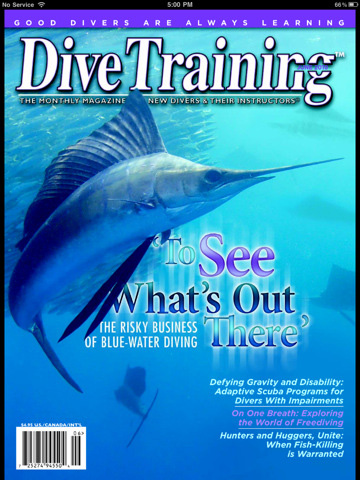
Most divers would have seen this magazine knocking around their local dive shop. Dive Training has a twenty year legacy dedicated to education-based articles. Well written and informative there is always something worth while in every issue for divers of all experience.
The App is free, as are the issues (at time of press) so there really is no reason to not have this on your iPad. Navigation is easy, but pages are taken directly from the print product, so don’t expect flashy animations and video content. It’s simple, effective and well worthy of your time.
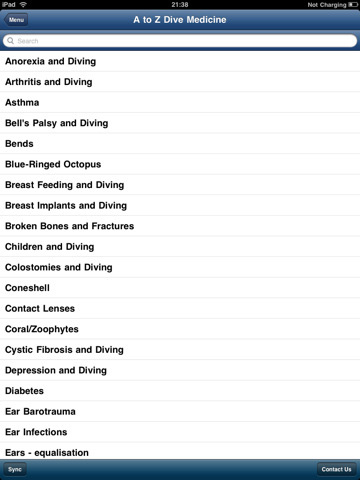
Firstly, you don’t have to be in London to benefit from this iPad diving App, the overall focus of which is health and medical attention. The LDC App has several simple elements, a pre-dive checklist focusing on physical checks, a simple but effective log book (not as comprehensive as the Dive Log, but a handy addition if the price tag of $11.99 puts you off the above) and a directory of medical terminology.
The LDC App can help you locate a Hyperbaric chamber, either by entering an area name, or by automatically using your current GPS location. Chambers can then be pin-pointed on Google Maps, incredibly good for making emergency action plans or when visiting new, unfamiliar dive sites.
Finally they offer “Diving Incident”, a series of yes and no questions that help determine a medical problem within a diver. I’d recommend a PADI Rescue Diver course before searching in your dive bag for an iPad, but it’s a good learning tool if nothing else. Add to this a comprehensive A-Z of diving medical terms and you have an excellent, free iPad app worth it’s weight in led.

If you’re a diver, there is more than a fair chance you have a keen interest in conservation and exploration. Earth Periodical is a new, free magazine made just for you. Now in it’s second issue the magazine offers unique interactive content, original articles by experts, video content and interactive an quiz. All for free. What more could an avid carer of our planet ask for? Put simply it’s aim is to educate, entertain and inspire people. From saving sharks, to space shuttle Discovery, from natural history news to equipment reviews. EP aims to give you something interesting. Perfect for your surface interval or when you’re waiting for tanks to get filled.
5) My Reef Aquarium 3D HD $2.99
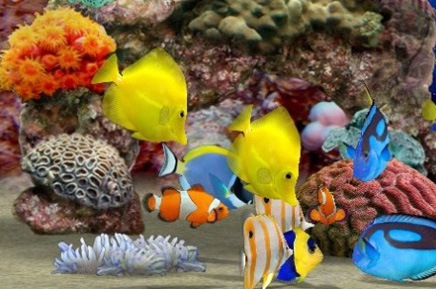
iPads do fun stuff. You need a balance between serious dive logs and entertainment. My Reef Aquarium 3D HD is basically an interactive aquarium for your iPad. Choose your tank, the background image and the fish that inhabit it. Feed the fish, knock on the glass to get their attention or simply sit it on your desk and day dream about your next dive in the Caribbean.
If you have young kids, this App will be the best thing you ever buy. Whether they are a year old or closer to ten, My Reef 3D HD will have them glued, interacting and best yet, quiet for hours! Worth the price alone.
Other Apps of interest:
DIVE Magazine (Free App, pay for issues)
101 Most Popular Dive sites of the Red Sea ($9.99)
Navy Diving Manual ($4.99)
Is Your Sunscreen Killing Corals?
With the summer season fast approaching, there has been a resurgence of concern over water-enthusiasts’ sunscreens potentially harming fragile coral reef systems. The need for sun protection is undeniable but as swimmers, divers and general ocean-lovers, how do we ensure that the products we out on our body are not harming corals?
In this article, I’m going to present you with all the facts and evidence linking coral bleaching and degraded reefs to swimmers’ sunscreen and determine the legitimacy of these claims.
The Claim
Four common sunscreen components can activate dormant viruses in coral’s symbiotic algae, known as zooxanthellae, that live within the reef’s tissues. The UV filters implicated are butylparaben, ethylhexylmethoxycinnamate, benzophenone-3 and 4-methylbenzylidene camphor. These ingredients, commonly found in many chemical sunscreens, are touted to cause complete coral bleaching at very low concentrations.
These sunblock chemicals stimulate viral replication until coral’s zooxanthallae explore, releasing viruses into the surrounding seawater, where they can infect neighboring coral reef systems. Claims have been made that about 4,000 to 6,000 metric tons of sunblock from swimmers wash-off into the world’s oceans annually, and that up to 10% of coral reefs are threatened by sunscreen-induced bleaching.
The Evidence
The study by an Italian team of scientists, R. Danovaro, L. Bongiorni, C. Corinaldesi, et al., published in Environmental Health Perspectives is the one piece of research done in support of sunscreen chemicals killing zooxanthallae and subsequently causing coral bleaching.
The Set-up
Coral branches of Acropora spp. and others were taken from tropical reefs in the Atlantic, Indian, and Pacific Oceans, as well as the Red Sea.
In situ and laboratory experiments were conducted by adding sunscreen aliquots and common UV filters to the corals. Using epifluorescence and microscopy, the zooxanthellae were monitored for viral infection and transmission.
The Findings
The Italian group of scientists found that the sunscreen ingredients killed coral and zooxnathallae withing 4 days by stimulating viruses (a 15-fold increase was observed in infection).
Experiments applying various sunscreen SPFs and concentrations to several coral species from different sites all proved to bleach corals.
The researchers concluded that based on a theoretical estimate of number of tourists using sunscreens in reef areas that up to 10% of the world’s coral reefs could be at risk for bleaching via sunscreen wash-off.
Also of note, R. Danovara et. al found that the coral bleaching effect was not dose-dependent, so reefs exposed even to very small concentrations of sunscreen are at risk.
The Verdict
Previous research has indicated that sunscreens can potentially bioaccumulate in the food chain and there may be a breakdown of sunscreens into toxic substances, until this most recent study, a link has never been shown between swimmers’ sunblock and coral reef bleaching (Leon-Gonzalez, 2011; Morohoshia, 2005).
Currently, there has only been one study published linking sunblock chemicals to the death of coral reefs published by R. Danovara, et al. And while published in a peer-reviewed journal, meaning the article has been critically assessed by a panel of scholars in the author’s, more studies will be needed to effectively conclude that swimmer’s sunscreens are putting 10% of the world’s coral reefs at risk of bleaching.
A completely in laboratory experiment cannot possible conclude that 10% of the world’s reef systems (outside of the experiment’s specific lab conditions) are at risk for bleaching from swimmers’ sunscreens.
I have no doubt under the exact laboratory conditions utilized in this study that corals will bleach. Corals are highly sensitive organisms and prone to bleaching at the slightest stress (sensitivity varies by species of course).
First, fracturing corals into nubbins and transporting them out of their ocean environment is always a risky business. It is very difficult to maintain corals (especially less hardy species such as Acropora) in lab conditions. The coral pieces used in experiments may have bleached with the addition of sunscreen aliquots because they were already highly stressed from the transport or due to other factors of the lab set-up (improper water temperature, poor water circulation, etc.). This may not be the case, but it was not discussed in the paper.
Second, the experimental set-up of immersing hands covered with sunscreen agents in a small water volume containing the coral pieces subjects the corals to a much higher concentration of sunscreen than they may experience out in the open ocean.
R. Danovara does indicate that even at low toxicity levels of sunscreen agents, corals may bleach. However, I’d like to see the results replicated a number of times and then more testing done in the ocean to confirm that sunscreen wash-off and the amount it is diluted in the sea actually causes reef bleaching.
A coral expert at the Florida Institute of Technology (FIT), Robert van Woesik, also questions whether the conditions utilized in the study truly reflect those found in nature.
This study certainly does have large implications for marine scientists running lab experiments with corals or managers of coral nurseries, as clearly a chemical sunscreen could cause bleaching and mortality of your coral specimens during testing in small water volumes.
However, until more research comes out, I’m still a firm believer that other human-induced pressures, such as pollution, sedimentation, overfishing and global warming, are much larger contributors to reef degradation than swimmers’ sunscreens.
Eco-Friendly Sunscreens
Even though I’m not in full agreement with the study discussed above, I do agree that ingredients in chemical sunscreens may be bad for human health as well as have the potential to bioaccumulate in the food chain.
If you’re looking for “reef safe” greener sunscreens, as I have been, I’ve got you covered! Whether you believe in the potential impact of chemical sunblocks on corals, you can reduce any risk to reef and ocean systems by choosing only sunscreens with physical UV filters (ie. titanium dioxide and zinc oxide). There are also a couple eco-friendly chemical sunscreens, just be sure to avoid sunblocks with octylmethoxycinnamate, benzophenone-3, parabens or octocrylene.
Here are my sunscreen recommendations:
- Badger produces some great natural, water-resistant sunscreens and is rated highest for safety and efficacy by the Environmental Working Group.
- Caribbean Solutions has another reef-safe, natural sunblock.
- Loving Naturals produces a zinc-based sunscreen with 100% natural ingredients.
- Reef Safe (made by Tropical Seas) claims to be completely for marine life.
- And of course, staying in the shade and wearing hats and cover-ups are also great ways to protect yourself from the sun
10 Easy Steps to Protect Coral Reefs
Feel overwhelmed by global climate change? Ocean acidification? Worldwide coral bleaching?
There ARE ways you can make a positive impact on this Earth and help preserve precious coral reef systems, whether you are a scientist, policy-maker or concerned citizen.
1. Learn and Educate. Read, watch and listen to everything you can about marine conservation and coral reefs and share what you learn with others. The more you learn, the more informed your actions to protect our oceans & reefs will be. At Project Blue Hope, we try to keep you as up-to-date as possible with the marine conservation, policy and science news.
2. Petition the Government. You have a voice, so use it! Contact your government representatives and call for increased protection for coral reefs via the expansion of marine protected areas. Demand the pollution of our oceans be put to an end.
3. Support “Green” Business. Businesses that are eco-friendly are also reef-friendly. Only use your money to support businesses that are dedicated to sustainable practices. A good way to find such establishments is via the National Green Pages. Also, if you own stock in a company, you can use your proxy ballot to push big businesses to “go green” and stop destructive fishing practices.
4. Volunteer on Vacation. If you don’t live near a coral reef, then go on vacation to visit one and volunteer at the local marine park. There are many organizations, such as REEF, Blue Ventures and Oceans Watch, that you travel with to volunteer your diving skills and do coral surveys and ocean clean-ups.
5. Use Only Organic/ Eco-Friendly Fertilizers. Even if you live far inland, fertilizer products still flow into the water system. Ultimately, fertilizers will run out to pollute the sea and harm coral reefs and marine life.
6. Consume Sustainable Seafood. Practice mindful eating and don’t consume overfished Bluefin Tuna, Atlantic Cod, Blue Marlin, Chilean Seabass, Farmed Salmon, Snapper or Grouper (to name a few). Seafood Watch’s pocket guides and online database are useful tools for determining whether your seafood is sustainable or not. If you are at a restaurant that serves these fish, fill out a comment card or talk with the chef to voice your opinion about their unsustainable seafood menu choices.
7. Lower Your Carbon Footprint. Help reduce pollution by walking, biking or utilizing public transportation vs. driving. Global (and ocean) warming is largely due to fossil fuel emissions from cars and industry, which leads to coral bleaching (and death). Also, planting a tree helps reverse global warming and reduce run-off into the seas.
8. Dive & Snorkel Responsibly. If you have the privilege to slip beneath the ocean’s surface, please, do not touch the reef or anchor your boat on the coral. Corals are delicate animals, despite their “rocky” appearance, and contact with the coral can damage and sometimes kill them.
9. Use Less Water. When you use water conservatively, you create less wastewater and run-off that will pollute our oceans. Also, properly dispose of your trash, as litter that ends up in the sea can harm fish & the reefs.
10. Spread the Message of “Blue Hope.” As divers, we have a close association with coral reef systems that few get to experience. The profound respect and wonder we feel for the oceans is a feeling we should all try to share. Share your excitement for coral reefs and commitment to protecting them with as many people as you can.
These ten action items are easy, yet effective when enacted collectively. Your actions and the actions of your local community can make a difference every day.
Scuba Wetsuit Care 101: Removing Odors & Extending Suit Life
If you want your wetsuit to last as long as possible, a bit of proper wetsuit care is all you need. The difference between a wetsuit with a 1 year life and 6 year life depends, to a certain extent, on how often you are using it. But to a larger extent, how well you take care of your wetsuit is going to either quicken or slow its deterioration. Below are 13 care tips for extending wetsuit life.
1. Neoprene and Hot Water Are Not Friends
Neoprene loses some of the flexibility when soaked in hot water. So hop in a cold shower with your wetsuit on or only soak it in lukewarm water.
2. Sun & UV Rays Deteriorate Neoprene
Sun and UV rays both cause your neoprene wetsuit to age more quickly. So if you need your scuba suit to dry, don’t try to hasten the process by placing it in the sun. In the long run, the neoprene will become hard and lose flexibility.
3. Don’t Put Your Wetsuit in a Hot Trunk
If your car has been sitting in a parking lot on a hot day, then putting your wet suit into the trunk is not a great idea. This will essentially “cook” your gear, increasing smells and breeding bacteria.
4. Turn Your Wetsuit Inside Out to Dry
To dry your wetsuit, its best to first turn it inside out before hanging it up. By turning the suit inside out, flexibility will be maintained on the outer side. This means that even if the wetsuit it not 100% dry to next time you put it on, you’ll for sure be crawling into a drier side.
5. Carefully Store
Carefully store your dry wet suit on a flat surface or hang on a wide coat hanger in your closet.
6. Quickly Clean & Dry Your Suit
After a dive, don’t let your wet wetsuit sit in your dive bag, all stinky, messy and sandy. Clean the suit quickly and dry it completely before storing away. This type of regular wetsuit care will be sure to increase its lifespan.
7. Avoid “Messy Dressing”
If you’re doing a beach or shore dive, keep your wetsuit up and aware from the mud/ sand. Its not so comfortable to pull on a sandy wetsuit! Also, when you take off your wetsuit, stand on pavement, a rock, your changing bag, grass or anything besides the middle of the sandy beach.
8. Wetsuits Don’t Belong in the Washer
Neoprene wetsuits must be handled with care and can’t be put through the washer and dryer. You have to hand wash and air dry.
9. Can I Iron my Wetsuit? …. No!
It’s a no-brainer that you should not iron your wetsuit. Just look at the rubber areas around the zippers and knees. Also, if you were to iron the neoprene, that amount of excessive heat would make the suit very stiff.
10. Bleach is Off-Limits
Strong washing agents, such as bleach, are way too harsh for your neoprene wetsuit (not to mention the discoloration that will occur). There are some mild cleansing agents, such as “Sink the Stink” and “Trident Wetsuit Cleaner” that you can purchase from your local dive shop, but regular dish detergent will work just as well (read on to find out how to get rid of wetsuit smells on your own).
11. Why Does My Wetsuit Stink?
Your wetsuit can stink if it was left, wet, in a bag for a while and wasn’t rinsed. The smell comes from bacteria that begin to feed on the normal sweat and body oils and odors clinging to the wetsuit after we use it. Also, if you urinate in your wetsuit, the pee can leave an odor behind.
12. How to Get Ride of Wetsuit Smells & Odors
As I mentioned, there are special cleaning soaps and solutions for getting rid of wetsuit odors, but I personally, find that there is an easy, more economical way to erase suit smells. Here is my homemade recipe for washing smelly wetsuits:
- 1st: Fill the tub up ¼ of the way with fresh, warm (not hot) water.
- 2nd: Add a couple tablespoons of dish washing detergent, just enough to get a dilute bubbly water bath for soaking.
Note: Some people will use laundry detergent, but I think even that is too harsh for neoprene (and tougher to rinse off). The only laundry detergent to consider using is Woolite. - 3rd: Wash your wetsuit in the tub of soap and the detergent will break down the body oils and odors. In addition, it will help wash away the bacteria that caused the smell in the first place .
- 4th: Rinse your wetsuit in fresh water in order to get all the detergent off. Then hang your wetsuit up to dry in the fresh air (away from direct sunlight).
- 5th: Every few weeks, repeat this process to keep your wetsuit completely odor-free!
Tank Cave - Cave Diving Australia
Cave Name: Tank Cave
Reference: 5L-230
Cave Area: Lower South East
Description: Named because a water tank used to rest right over the top of the entrance, Tank Cave is an extensive, maze like system with over 8km of diveable passage which makes it one of the longest underwater caves in Australia.
Owner/Manager: Rob Dycer
Access: Via CDAA. Cave leased to CDAA..
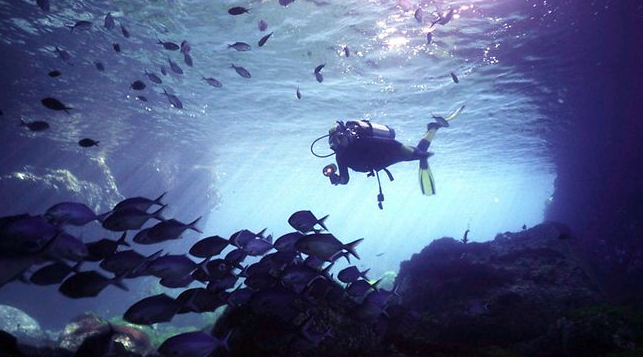
The South Australian region near Mt Gambier is known of it’s many sinkholes and caves. One particular cave that stands out amongst the rest is Tank Cave. Tank Cave is probably the most complex and biggest cave system in Australia, with more than eight kilometers of underwater passages. The cave is relatively shallow a max depth around 65ft (20m). This system gets its name from the fact that there used to be a water tank directly over the top of the entrance.
Rumored since the late 1960s as a “cave diving site” of some type, this amazingly extensive feature is today considered by many to be the the best cave diving as far as South Australian cave diving sites
The Tank Cave entrance is on private property and the Cave Divers Association of Australia (CDAA) strictly control access to the dive site. The complicated nature of the cave system, requires a strict familiarization process that allows cave divers to get to know the cave step by step. You must go through this process before you are allowed access to the site, the clear benefit means that every cave diver is very familiar with all the main passages of Tank Cave before they can explore further.
Open Water - Padi Certification
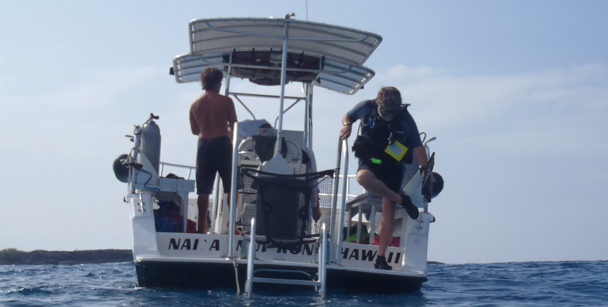
The open water course will be the standardized training which most individuals complete while studying diving. It’s recognized internationally and permits a diver to finish divings within all places worldwide. Upon completion of this course, you’ll be competent enough to dive within open water, and possess enough knowledge to remain safe. There’re several diving schools which provide PADI training, and you ought to have the ability to locate a great one within your local region without much complication. Many holiday places which are known for diving will possess diving centers which provide training for those who want to qualify for warmer surroundings.
The inital phase of the course will be a detailed theory module that covers every element of diving from technique and equipment to every vital safety aspect. It’s important that prior to somebody taking to the water, they possess knowledge of every one of the techniques involved. Discussing how the equipment operates, diving planning, breathing techniques, navigation and more, the theory portion of a course is made to offer the diver thorough knowledge of diving.
The practical portion of the PADI course practices everything that’s been studied within the theory module. In order to pass a practical exam, the diver has to prove that she or he knows the procedures and could safely dive. Covering aspects involving ascents and descents, underwater swimming, breathing and cramp relief and mask removal; the diver will be offered a thorough overview of diving and complete the course feeling confident concerning her or his new skill. Course costs typically cover insurance, equipment hire, and instructor and pool costs, so at this phase, there’s no obligation to spend a large quantity of money upon equipment.
Having finished the course, you’re now prepard to travel worldwide exploring underwater reefs, wrecks and several marine life forms. Holiday places like The Canary islands, Thailand and Egypt have become very common amongst scuba divers.
Discover Scuba Diving
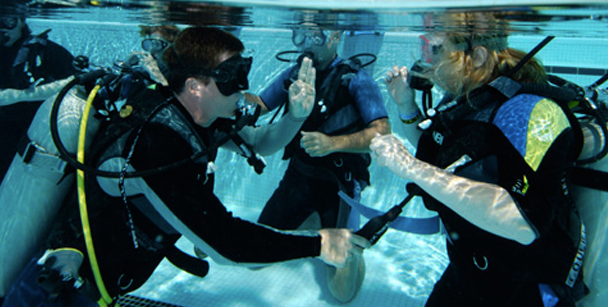
If you’re conducting a Discover Scuba Diving program, that’s the more common certification of its kind, they’ll begin with a bit of paperwork, then show you to the instructor. Additional diving certification organizations such as SSI possess similar programs which follow similar, yet differing procedures, all possess the exact same goal; to have a good time and make you be confident and safe within the water.
Plus, you can get credit! If your Discover Scuba Diving program includes an actual scuba dive in open water, your experience may count toward PADI Scuba Diver or Open Water Diver certification, putting you a step ahead of the game when you decide to go for it.
Your instructor will probably have you view a flip chart. The Discover Scuba Diving flip chart will posses vital dive theories and crucial diving rules and ideas which are critical to remember, like the golden rules of diving, 1) Never hold your breath, 2) Equalize your air spaces and ears each couple of meters or as pain is felt.
Next, your instructor will conduct a pre-diving brief explaining the skills, signals and procedures which you’re going to perform within the water, that involve skills for replacing and recovering the regulator, clearing your mask of water, as well as using and finding the different air source. There’re a few additional easy skills which you’ll be expected to perform. Your instructor will assist you with your equipment, then be sure that diving gear will be set up properly.
Then, your instructor will take the group within a pool, or shallow water, that you could stand in. Your instructor should discuss the skill which you’re going to perform, then you’ll go under the water together. Your instructor should first perform the skill, then ask every individual to conduct the skill.
Lastly, your instructor, in most instances, will take your group from the area of teaching, out to the region where they could take you on the underwater tour, showing you an entirely new world. For many, it’ll be a dream come true, and surely one that you’ll recall for a lifetime.
Some other learnings:
- Learn what wearing scuba equipment feels like and how easy it is to move around underwater while wearing it
- Find out what it’s like to breathe underwater and learn whether you can be comfortable there
- Learn some basic skills and safety rules that will carry over to your full scuba certification course when you take the next step
Suunto Movescount & Scuba Diving
New to the diving community is the revolutionary Suunto Movescount, a user friendly tool to share all of your sporting activities with the world. Mainly this community has been used for runners and bikers to share and record their times, as well as gain likes and achievements through the website.
Suunto has decided that they should give divers an equal opportunity to share their exciting dive adventures. Movescount is a great visual tool for you to gain instant satisfaction from posting your dives to the world and sharing them with other divers. With Movescount you can also log your own personal achievements without sharing with others if you’re feeling a little anti-social, or just want to surprise the world at a later date!
Scuba diving has been looking for a tool like this, and with Suunto being one of the leading suppliers of dive equipment it only seems fitting that they would have the tools to make this happen. The website has a nice interface, almost “Facebook like”, giving you the ability to add fans, follow athletes, join groups and customize your own profile. A digital logbook if you will, with the ability to access from anywhere at anytime. This is a also a great tool for finding new dive buddies and connecting with people that you have met through the site. So bringing your laptop on vacation can now be mixed with your dive computer to record even more information about your awesome dives, and to record your bottom time accurately. This is not ONLY a tool to record your scuba diving activity, it has almost every sport you can think of, and from martial arts to badminton you can record ALL of your sporting activities.
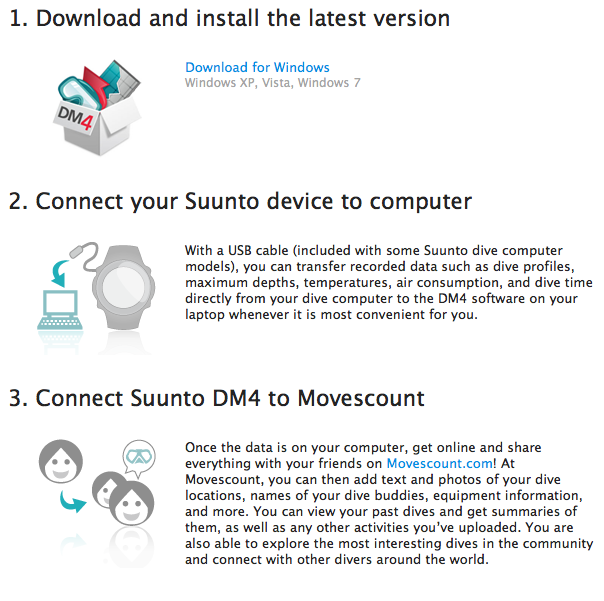


Every good technology company knows, if you make a web interface for your industry, you should most definitely make a tool to use it on the fly! Like the new Suunto D6i, which allows you to easily upload and store all of your dive information directly from your laptop to Movescount.com. The watch itself is not different in any way from the D6, adding an “i” has only given it the ability to transfer directly to the website without any data having to be input by the user. The Suunto D6 is a great wrist computer that could easily pull off being an expensive wrist watch. When I travel and teach scuba diving my D4 never leaves my wrist, maybe it is time for me to upgrade to the D6i and start tracking my moves! This technology is new, and will begin to be a very exciting craze of sharing your healthy movements to your friends and newly acquired fans.
You can take a tour of Suunto Movescount by Clicking Here
Check out www.scubadiverlife.com to learn all about diving if you aren’t a scuba diver already, if you are; check us out and then head over to www.movescount.com and sign up for your account!
Saturday, July 2, 2011
Sea Shepard Cause
Please join the following Cause. These guys are called pirates but without them, the sea's/oceans are a free for all slaughter house, the marine life can't fight or talk for themselves, so please help out.


A One Dollar from everyone who visits, will make a load of difference. Tell your friends as well. I'm sure you can spend a dollar, or have a look at there shop and purchase something cool, which also is a donation.


About
Sea Shepherd is a direct-action conservation group lead by Captain Paul Watson, a man whom author Farley Mowat calls "the world's most aggressive, most determined, most active and most effective defender of wildlife."
Join the official facebook page!
http://www.facebook.com/seashepherdco...
Goto the website. http://www.seashepherd.org/
Tell your friends.
Join the official facebook page!
http://www.facebook.com/seashepherdco...
Goto the website. http://www.seashepherd.org/
Tell your friends.
Affiliated With
SEA SHEPHERD CONSERVATION SOCIETY
Donations Go To…
SEA SHEPHERD CONSERVATION SOCIETY
A 501(c)(3) nonprofit
A 501(c)(3) nonprofit
Positions
- Defend
- Conserve
- Protect
Wednesday, June 15, 2011
Deep Diving
As new divers, the seemingly arbitrary 20m depth restriction seems kind of foolish; after all, you’ve got your tables right? You just picked up that sweet computer from the shop that’s rated to 100m, so why can’t you go there? Well, to be frank, while deep diving is really an extension of fundamental skills you’ve learned as an Open Water Diver (or equivalent), there are a few things that set it apart and so additional training and familiarization is recommended before you charge down to 40m! The keys for safe deep diving are redundancy, equipment and situational awareness. Deep dives are different from regular, shallower dives because the environment can change quite a bit on the way down. Where the first 10m of a dive might be decent for vis and light, it might be near night diving conditions deeper. Absorption and turbidity eat away at the colours you can see, and your air supply dwindles faster. In addition to all that, narcosis effects can become more pronounced as well, adding an element of risk all its own to the dive.
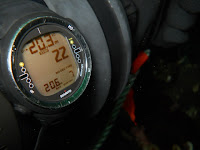
Ensure to check your Depth
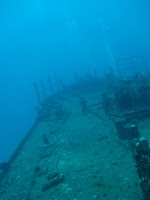
Wreck Diving does get deep
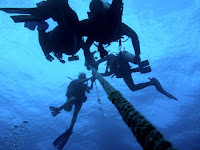
Safety Stops are a must
If you’re planning a deep dive, plan for all reasonable contingencies. Use redundant equipment for vital things like your depth gauge (probably the most important redundancy). Carry at least one dive light, but a secondary is never a bad plan. Talk to local divers and find out the conditions that you might be facing when you get to the bottom. If it’s a wall dive, watch your depth gauge(s) like a hawk! Some computers can be set for deep stops, so this is a good option as well. Situational awareness is a trait that good divers seek to develop as much as possible over their diving careers. In a deep dive, it’s as important as it would be on a night or wreck dive. Paying attention to your depth, watching your dive buddy and yourself for narcosis and keeping track of your air are the most key things to watch. And finally, brush up on your certifying agencies emergency decompression stop rules and write them on your slate so you don’t forget. You’re already increasing your risk of DCI, so there’s no sense increasing it further by blowing your tables and not taking the needed stop. Safety stops aren’t optional with deep dives!
Ensure to check your Depth

Wreck Diving does get deep

Safety Stops are a must
If you’re planning a deep dive, plan for all reasonable contingencies. Use redundant equipment for vital things like your depth gauge (probably the most important redundancy). Carry at least one dive light, but a secondary is never a bad plan. Talk to local divers and find out the conditions that you might be facing when you get to the bottom. If it’s a wall dive, watch your depth gauge(s) like a hawk! Some computers can be set for deep stops, so this is a good option as well. Situational awareness is a trait that good divers seek to develop as much as possible over their diving careers. In a deep dive, it’s as important as it would be on a night or wreck dive. Paying attention to your depth, watching your dive buddy and yourself for narcosis and keeping track of your air are the most key things to watch. And finally, brush up on your certifying agencies emergency decompression stop rules and write them on your slate so you don’t forget. You’re already increasing your risk of DCI, so there’s no sense increasing it further by blowing your tables and not taking the needed stop. Safety stops aren’t optional with deep dives!
Planning and conducting deep dives is a big part of diving for me and many other people, particularly the Tec set. While you are able to go to whatever depth you want, it’s good to get the extra training (and master Dalton’s Law) before you just plunge in. 40m is a long way from the surface and a safe dive is a good dive!
Subscribe to:
Posts (Atom)