Showing posts with label Deep Diving. Show all posts

Sunday, July 1, 2012

Real-life mermaid swims with whales


Underwater swimmer Hannah Fraser has been fascinated with mermaids since she was three years old. Hannah, 36, an Australian who now lives in LA, made her first mermaid tail at the age of nine, after seeing the film Splash with Daryl Hannah. Now she works as a model, actress and performer, swimming with whales, dolphins, stingrays and even sharks.


Stunning: Photographer Ted Grambeau captured beautiful photographs of 36-year-old Hannah Fraser swimming with whales in the wild to promote their conservation.

Hannah can hold her breath for up to two minutes and swim to depths of 45 feet, allowing her to move like a real mermaid, without the restraints of diving gear.In these images she is seen swimming with humpback whales off Vava'u Island, Tonga, to promote marine conservation and oppose whale hunting.


Hannah and her then husband Dave Rastovich, a surfer, were upset and frustrated after International Whaling Commission meetings where whaling nations were allowed to continue their slaughter under the guise of 'scientific research'.'It was depressing and we wanted to go somewhere to connect with the whales and to raise awareness,' said Hannah.


The couple flew to Tonga with photographer Ted Grambeau, who was able to capture beautiful images of humpbacks swimming with Hannah, in scenes documented by filmmaker Bali Strickland. 'A baby humpback was curious and actually came up to me,' said Hannah. 'The whales were singing so loudly and the baby whale was squealing, which sounds even louder under the water. It was a very powerful experience.'


Many photographs for anti-whaling campaigns show brutal acts including harpooning and whales being winched onto ships, which can be too horrific for ordinary observers. But Ted's images appear in the children's book, The Surfer and the Mermaid, and aim to inspire whale conservation. He added: 'All the shots of Hannah are really poetic - really just surreal, beautiful shots.'


In 2007, Hannah swam in the sea in Taiji, Japan, with 30 surfers, celebrities and musicians, in an attempt to halt the ruthless slaughter of thousands of dolphins by local fishermen. Hannah remembers: 'Half of the dolphins had been caught and the others were roped off in the middle of the bay to be herded towards the fishermen.


Deep blue: Hannah is seen here swimming with humpback whales off Vava'u Island,
Tonga, to raise awareness of marine life and oppose whale hunting

'Instead of being frightened, the dolphins were trying to come closer to us in their net, as if they knew we wanted to help them. 'But at this point the fishermen were hitting us with sticks and moving their boat propellers towards us. We couldn't get any closer and we couldn't save the dolphins. 'It was indescribable to see this happening and have to abandon them. I cried for hours afterwards. It was hard to be part of the human race at the point.'


Two years later, in 2009, Hannah swam in her tail with 14ft Great White Sharks off Guadalupe island, Mexico. 'I thought if I was going to be a professional mermaid I'd have to face my fear of sharks,' she admitted. After trying out the shark-infested waters in scuba gear, Hannah was about to put on her mermaid tail, when one of the sharks became trapped in the diver's cage. 'Luckily the shark freed itself in time. But it made me realise it was safer not to use the cage,' she said.

'I got my tail on and got into the water. I was supposed to be surrounded by divers, but in the mermaid tail I swim much faster than anyone else. I realised I was on my own, but I stayed calm.'


She added: 'Another time a shark turned round and came towards me, so I made a scary face and screamed at it in the water. Amazingly I scared it off. I felt invincible for months afterwards.' Filmmaker Rob Benavides is currently shooting a documentary about Hannah's life, which will feature her work as a model, diver, and sea-life campaigner. 'One of the imperative messages in marine conservation right now is over-fishing,' she said. 'We should be asking countries to better regulate their fishing industries.


'We shouldn't be eating any fish, but if any it should be only little ones. Large fish take years to grow and reach maturity. If we continue taking them from the ocean it will be a long time before stocks are replenished.' Hannah Fraser is featured in a new children's book Last Night I Swam With A Mermaid by Kimberley Muller.


Inspiration: Hannah says she made her first fish tail after seeing Daryl Hannah play a mermaid in the 1984 film Splash

Wednesday, June 27, 2012

Immersed Senses

Improving the limitations of current scuba diving system, designer Adam Wendel has come up with a futuristic device named the “Immersed Senses” that changes the way the diver sees, hears, and breathes underwater, allowing them to become a part of their surrounding environment. Immersed Senses is the future of underwater diving and exploration. Featuring a LED flashlight to let the diver to observe the dark depths of the ocean, the mask also includes a large OLED glass display to offer a panoramic view of the surroundings. The OLED enclosed helmet also allows the extracted oxygen to flow freely throughout the helmet, as if you are breathing on land without any breathing apparatus.


While an interactive OLED display gives access to underwater GPS maps, therefore allowing the diver to navigate efficiently throughout the ocean’s landscapes. The OLED also offers software that can identify all species of fish, coral and other ocean dwelling creatures that diver is currently viewing. With Immersed Senses, experiencing the underwater world is now fully interactive. In addition, the OLED screen depicts important info such as oxygen toxicity, nitrogen levels and even body heat to keep the diver well informed and safe.

Made in haptic glass, the device concept touts futuristic technology to the core. An optically clear glass with microscopic pours keeps water molecules out, yet it allows sound waves to pass through. Sound travels six times faster underwater than on land, however it is nearly impossible to interpret where the sound is coming from. The haptic glass interprets the sound wave orientation then displays the source and direction on the OLED display.

Water leakage is eliminated with the use of a silicone lining that seals the helmet to the skin. The silicone’s flexibility affords the diver to explore with comfortable movements. The orange side panels assist in internal circulation of the extracted oxygen. The rear of the helmet contains an electrolysis reactor that extracts oxygen from saltwater. The breathable oxygen is circulated throughout the helmet, creating a revolutionary underwater breathing experience.

Immersed Senses operates by a battery that utilizes a centrifuge mechanism to pull oxygen from seawater that begins the electrolysis reaction. Saltwater is extracted into the bottom reservoir that reacts with hydrogen gas. The saltwater is then charged by a positive and negative anode/cathode that generates breathable oxygen. Two internal devices help to circulate the oxygen to the diver’s mouth and nose.

The diver then breathes in the oxygen and out carbon dioxide, which exits the helmet. The battery and stored hydrogen can keep a diver submersed for up to 8 hours. The Immersed Senses revolutionizes how a human can breathe underwater, as well as interact with the OLED display offering a panoramic view of the deep sea.


Friday, June 8, 2012

Packing Tips for Photographers

It used to be so easy to get to distant dive locations with virtually any amount of camera gear needed to do the job. Load up a dive bag, a clothing bag, maybe a big roller case for topside cameras to go on the airplane with you--then stuff the rest in a giant hard case. Some shooters had different strategies, maybe an Igloo cooler with the lid duct-taped down to make it look like a cargo of dead fish rather than live cameras, hoping to avoid theft. But the common feeling was that overweight was an after-thought, and if we got charged at all, it would be maybe $50. But as Mr. Dylan once sang, "the times they are a-changin'," and as fuel costs force airlines' bottom lines deeper into the red, they pass some of those costs along to their passengers in the form of baggage fees. Underwater photographers get hit especially hard, so for shooters feeling the pinch, here are five tips for packing, planning and navigating baggage restrictions on your next dive trip.

To emphasize how significantly times have changed, I just came home from an otherwise terrific trip to the Red Sea. To get there, I went via London on an international carrier, which wasn't overly restrictive. But I connected with a charter flight to Marsa Alam, Egypt--low-cost charter flights with few amenities are a common choice for divers traveling from Europe--and that carrier was extremely restrictive in its baggage allowance, with astronomical overweight charges. What's the lesson here? Know what you're in for ahead of time. Domestic U.S. flights, which may include flights to the Caribbean and Mexico, international flights and charter flights often have different baggage allowances and fees. For each carrier you're ticketed with, check the web site for updated information about baggage allowances and fees for the type of flight you're on so you can pack and budget according to the most restrictive leg of your trip.

The overweight charge on my charter flight to Marsa Alam was about $6.81 per pound. Each passenger was allowed 55 pounds for the combination of dive gear, clothing and camera equipment. Normally I travel with two 60-pound cases, one hard case for housings and strobes and one dive bag for gear and clothing. That's 120 pounds, and then I have a wheeled carry-on case for my topside cameras that weighs another 40 pounds. If I traveled as normal, I'd have been 105 pounds overweight, paying $715 in overweight fees, each way. Sometimes, you'll get lucky. Going to Marsa Alam, I didn't get charged any fees, but I took that to be luck-of-the-draw in getting a generous gate agent because other travelers with the same amount of baggage or less got thoroughly hammered. On my return flight, I got one particularly strict baggage inspector who hit me with $600 in overweight charges. Pack and weigh your bags well ahead of time, and do the math to figure out the maximum cost in fees you may incur. Then budget this amount into the cost of your trip to avoid spending more than you planned. A handy little travel tool is Balanzza--balanzza.com--a lightweight digital scale that will tell you exactly what your bags weigh, in pounds or kilos.

Not every shoot requires the same gear, and it's rare that one destination requires every piece of equipment I have. For the Red Sea I shot predominantly wide-angle because the area's signature scenes are massive schools of fish and lavish soft coral formations punctuated by brilliantly colored tropical reef fish. All these features were so compelling there was no way I was shooting macro. So I left my flat port and macro lenses at home. If overweight charges will be a problem, plan your shoot according to the best photo opportunities at the destination, and leave the rest behind.

Underwater photographers need to accept that airlines are going to make money any way they can, and hitting us for overweight is likely to be the their easiest, quickest revenue-generator. To avoid being lambs-to-the-slaughter, we need to get clever in terms of how we pack. The most fragile and irreplaceable items should come aboard as carry-on. At the very least, carry-on a single digital camera body and a few primary lenses, as well as a laptop computer and portable hard-drive. Ideally, you would carry-on your housing as well--you might be able to rent a strobe on location if your checked baggage is lost or delayed, but you'll need the camera-specific housing. Having said that, I usually check my housing, just because it is big and heavy, but if you use a smaller, lighter housing, get it in your carry-on if possible.

When planning your packing strategy for a photo trip, don't forget your contingency plan. A good tool kit for field repairs can help minimize redundant equipment. If you can fix certain parts of your setup, you may be able to avoid the weight and expense of a spare. Here are some basic suggestions for your Save-a-Camera kit:

  • Spare camera body - If the worst happens and your housing floods, you can dry out the housing and go back to work. But the delicate camera electronics will most likely get fried. A second camera body of the same configuration allows for quick replacement of drowned gear, and makes those topside shots easier if your only camera isn't already encased in a housing.
  • Tools should include a small crescent wrench, vise grips and/or pliers, jeweler's screwdrivers, a pocket knife, small flashlight, air bulb, lens cleaning cloth and a device for cleaning dirty sensors. I use a brush from visibledust.com
  • Extra cords for the strobes, and if possible, a third strobe head so you've got a back-up for dual strobe work.
  • Spare O-rings for your housing and strobes, and extra O-ring grease, are must haves. And always make sure you use the type of grease recommended by the O-ring manufacturer. Mixing and matching different brands can cause O-rings to swell and fail.

Plastic Trash Altering Ocean Habitats

A 100-fold upsurge in human-produced plastic garbage in the ocean is altering habitats in the marine environment, according to a new study led by a graduate student researcher at Scripps Institution of Oceanography at UC San Diego.

In 2009 an ambitious group of graduate students led the Scripps Environmental Accumulation of Plastic Expedition (SEAPLEX) to the North Pacific Ocean Subtropical Gyre aboard the Scripps research vessel New Horizon. During the voyage the researchers, who concentrated their studies a thousand miles west of California, documented an alarming amount of human-generated trash, mostly broken down bits of plastic the size of a fingernail floating across thousands of miles of open ocean.

At the time the researchers didn't have a clear idea of how such trash might be impacting the ocean environment, but a new study published in the May 9 online issue of the journal Biology Letters reveals that plastic debris in the area popularly known as the "Great Pacific Garbage Patch" has increased by 100 times over in the past 40 years, leading to changes in the natural habitat of animals such as the marine insect Halobates sericeus. These "sea skaters" or "water striders"—relatives of pond water skaters—inhabit water surfaces and lay their eggs on flotsam (floating objects). Naturally existing surfaces for their eggs include, for example: seashells, seabird feathers, tar lumps and pumice. In the new study researchers found that sea skaters have exploited the influx of plastic garbage as new surfaces for their eggs. This has led to a rise in the insect's egg densities in the North Pacific Subtropical Gyre.

Such an increase, documented for the first time in a marine invertebrate (animal without a backbone) in the open ocean, may have consequences for animals across the marine food web, such as crabs that prey on sea skaters and their eggs.

"This paper shows a dramatic increase in plastic over a relatively short time period and the effect it's having on a common North Pacific Gyre invertebrate," said Scripps graduate student Miriam Goldstein, lead author of the study and chief scientist of SEAPLEX, a UC Ship Funds-supported voyage. "We're seeing changes in this marine insect that can be directly attributed to the plastic."

The new study follows a report published last year by Scripps researchers in the journal Marine Ecology Progress Series showing that nine percent of the fish collected during SEAPLEX contained plastic waste in their stomachs. That study estimated that fish in the intermediate ocean depths of the North Pacific Ocean ingest plastic at a rate of roughly 12,000 to 24,000 tons per year.

The Goldstein et al. study compared changes in small plastic abundance between 1972-1987 and 1999-2010 by using historical samples from the Scripps Pelagic Invertebrate Collection and data from SEAPLEX, a NOAA Ship Okeanos Explorer cruise in 2010, information from the Algalita Marine Research Foundation as well as various published papers.

In April, researchers with the Instituto Oceanográfico in Brazil published a report that eggs of Halobates micans, another species of sea skater, were found on many plastic bits in the South Atlantic off Brazil.

"Plastic only became widespread in late '40s and early '50s, but now everyone uses it and over a 40-year range we've seen a dramatic increase in ocean plastic," said Goldstein. "Historically we have not been very good at stopping plastic from getting into the ocean so hopefully in the future we can do better."

###

Coauthors of the study include Marci Rosenberg, a student at UCLA, and Scripps Research Biologist Emeritus Lanna Cheng.

Funding for SEAPLEX was provided by the University of California Ship Funds, an innovative program that allows a new generation of scientists to gain valuable scientific training at sea, Project Kaisei/Ocean Voyages Institute, the Association for Women in Science-San Diego and the National Science Foundation's (NSF) Integrative Graduate Education and Research Traineeship program. The NOAA Okeanos Explorer Program (2010 Always Exploring expedition) and National Marine Fisheries Service provided support for the 2010 samples. Other study support was provided by Jim and Kris McMillan, Jeffrey and Marcy Krinsk, Lyn and Norman Lear, Ellis Wyer and an anonymous donor. Other support was provided by the California Current Ecosystem (CCE) program, part of NSF's Long-Term Ecological Research (LTER) program.


Underwater Photography at it's best

‘Untitled’ – Sweetlips in an unspecified location
Photograph: Jose Alejandro Alvarez/Barcroft media

‘Are you looking at me?’ – Jack fish in Sipadan, Borneo, Malaysia
Photograph: John Hill/Barcroft Media

‘Continental trench’ – A diver in a continental trench in Silfra, Iceland
Photograph: Magnus Lundgren/Barcroft Media

‘Harlequin shrimps’ – Harlequin shrimps in Tulamben, Bali, Indonesia
Photograph: Francesco De Marchi/Barcroft Media

‘Lion Fish’ – A lion fish with schooling glassfish in the Red Sea, Egypt
Photograph: Amir Stern/Barcroft Media

‘Multitude’ – schooling catfish in Indonesia
Photograph: Acevedo Eduardo/Barcroft Media

‘Hitting sailfish’ – Sailfish attacking schooling fish in Port St Johns, South Africa
Photograph: Alexander Safonov /Barcroft Media

‘Schooling Jacks’ – Diver and schooling jackfish in Indonesia
Photograph: Maria Rivarola/Barcroft Media

‘Stargazer’ – Stargazer in Blue Heron Bridge, Florida
Photograph: Keri Wilk/Barcroft Media

‘Struggle for freedom’ – Baltic herring inside a net in Baltic Sea
Photograph: Karel Bernard/Barcroft Media


Thanks to Keri’ – Juvenile flying fish in Raja Ampat, Indonesia
Photograph: Michele Davino/Barcroft Media

‘Underwater Sadness’ – A sea turtle caught in a net in Sea of Cortez, Mexico
Photograph: Ramon Dominguez/Barcroft Media

Saturday, July 2, 2011

Project AWARE

Project AWARE Foundation works in partnership with divers and water enthusiasts to combat challenges facing underwater environments. We involve these volunteers in hands-on environmental activities like International Cleanup Day and The International Whale Shark Project. Project AWARE also inspires conservation by incorporating its messages in dive training materials as well as creating awareness and education campaigns like Protect the Sharks, Protect the Living Reef and AWARE Kids. The Foundation Grant Program funds grass-roots environmental projects that address key foundation focus areas, volunteer-supported community activism and critical research with direct contributions made by people like you. Follow cause on Facebook

Donations Go To…

PROJECT A W A R E FOUNDATION
A 501(c)(3) nonprofit

Positions

  1. Dive carefully in fragile aquatic ecosystems, such as coral reefs.
  2. Be aware of your body and equipment placement when diving.
  3. Keep your diving skills sharp with continuing education.
  4. Consider your impact on aquatic life through your interactions.
  5. Understand and respect underwater life.
  6. Resist the urge to collect souvenirs.
  7. If you hunt and or gather game, obey all fish and game laws.
  8. Report environmental disturbances or destruction of your dive sites.
  9. Be a role model for other divers in diving and non-diving interaction with the environment.
  10. Get involved in local environmental activities and issues.

Sea Shepard Cause

Please join the following Cause. These guys are called pirates but without them, the sea's/oceans are a free for all slaughter house, the marine life can't fight or talk for themselves, so please help out.


About

Sea Shepherd is a direct-action conservation group lead by Captain Paul Watson, a man whom author Farley Mowat calls "the world's most aggressive, most determined, most active and most effective defender of wildlife."

Join the official facebook page!
http://www.facebook.com/seashepherdco...

Goto the website. http://www.seashepherd.org/

Tell your friends.

Affiliated With

SEA SHEPHERD CONSERVATION SOCIETY

Donations Go To…

SEA SHEPHERD CONSERVATION SOCIETY
A 501(c)(3) nonprofit

Positions

  1. Defend
  2. Conserve
  3. Protect
A One Dollar from everyone who visits, will make a load of difference. Tell your friends as well. I'm sure you can spend a dollar, or have a look at there shop and purchase something cool, which also is a donation.

Wednesday, June 15, 2011

Deep Diving

As new divers, the seemingly arbitrary 20m depth restriction seems kind of foolish; after all, you’ve got your tables right? You just picked up that sweet computer from the shop that’s rated to 100m, so why can’t you go there? Well, to be frank, while deep diving is really an extension of fundamental skills you’ve learned as an Open Water Diver (or equivalent), there are a few things that set it apart and so additional training and familiarization is recommended before you charge down to 40m! The keys for safe deep diving are redundancy, equipment and situational awareness. Deep dives are different from regular, shallower dives because the environment can change quite a bit on the way down. Where the first 10m of a dive might be decent for vis and light, it might be near night diving conditions deeper. Absorption and turbidity eat away at the colours you can see, and your air supply dwindles faster. In addition to all that, narcosis effects can become more pronounced as well, adding an element of risk all its own to the dive.


Ensure to check your Depth

Wreck Diving does get deep


Safety Stops are a must

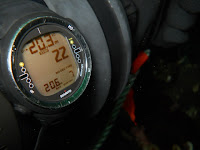
If you’re planning a deep dive, plan for all reasonable contingencies. Use redundant equipment for vital things like your depth gauge (probably the most important redundancy). Carry at least one dive light, but a secondary is never a bad plan. Talk to local divers and find out the conditions that you might be facing when you get to the bottom. If it’s a wall dive, watch your depth gauge(s) like a hawk! Some computers can be set for deep stops, so this is a good option as well. Situational awareness is a trait that good divers seek to develop as much as possible over their diving careers. In a deep dive, it’s as important as it would be on a night or wreck dive. Paying attention to your depth, watching your dive buddy and yourself for narcosis and keeping track of your air are the most key things to watch. And finally, brush up on your certifying agencies emergency decompression stop rules and write them on your slate so you don’t forget. You’re already increasing your risk of DCI, so there’s no sense increasing it further by blowing your tables and not taking the needed stop. Safety stops aren’t optional with deep dives!

Planning and conducting deep dives is a big part of diving for me and many other people, particularly the Tec set. While you are able to go to whatever depth you want, it’s good to get the extra training (and master Dalton’s Law) before you just plunge in. 40m is a long way from the surface and a safe dive is a good dive!