

Showing posts with label Scuba. Show all posts
Showing posts with label Scuba. Show all posts
Thursday, January 17, 2013

Tuesday, July 19, 2011
Suunto Movescount & Scuba Diving
New to the diving community is the revolutionary Suunto Movescount, a user friendly tool to share all of your sporting activities with the world. Mainly this community has been used for runners and bikers to share and record their times, as well as gain likes and achievements through the website.
Suunto has decided that they should give divers an equal opportunity to share their exciting dive adventures. Movescount is a great visual tool for you to gain instant satisfaction from posting your dives to the world and sharing them with other divers. With Movescount you can also log your own personal achievements without sharing with others if you’re feeling a little anti-social, or just want to surprise the world at a later date!
Scuba diving has been looking for a tool like this, and with Suunto being one of the leading suppliers of dive equipment it only seems fitting that they would have the tools to make this happen. The website has a nice interface, almost “Facebook like”, giving you the ability to add fans, follow athletes, join groups and customize your own profile. A digital logbook if you will, with the ability to access from anywhere at anytime. This is a also a great tool for finding new dive buddies and connecting with people that you have met through the site. So bringing your laptop on vacation can now be mixed with your dive computer to record even more information about your awesome dives, and to record your bottom time accurately. This is not ONLY a tool to record your scuba diving activity, it has almost every sport you can think of, and from martial arts to badminton you can record ALL of your sporting activities.
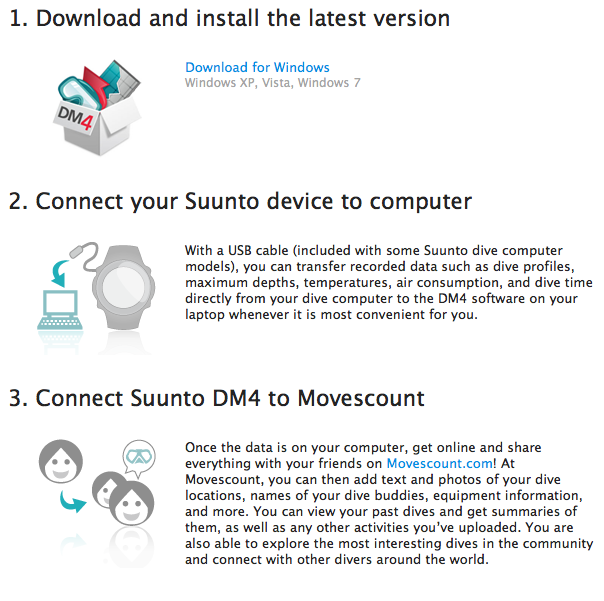

Every good technology company knows, if you make a web interface for your industry, you should most definitely make a tool to use it on the fly! Like the new Suunto D6i, which allows you to easily upload and store all of your dive information directly from your laptop to Movescount.com. The watch itself is not different in any way from the D6, adding an “i” has only given it the ability to transfer directly to the website without any data having to be input by the user. The Suunto D6 is a great wrist computer that could easily pull off being an expensive wrist watch. When I travel and teach scuba diving my D4 never leaves my wrist, maybe it is time for me to upgrade to the D6i and start tracking my moves! This technology is new, and will begin to be a very exciting craze of sharing your healthy movements to your friends and newly acquired fans.
You can take a tour of Suunto Movescount by Clicking Here
Check out www.scubadiverlife.com to learn all about diving if you aren’t a scuba diver already, if you are; check us out and then head over to www.movescount.com and sign up for your account!
Saturday, July 2, 2011
Sea Shepard Cause
Please join the following Cause. These guys are called pirates but without them, the sea's/oceans are a free for all slaughter house, the marine life can't fight or talk for themselves, so please help out.


A One Dollar from everyone who visits, will make a load of difference. Tell your friends as well. I'm sure you can spend a dollar, or have a look at there shop and purchase something cool, which also is a donation.


About
Sea Shepherd is a direct-action conservation group lead by Captain Paul Watson, a man whom author Farley Mowat calls "the world's most aggressive, most determined, most active and most effective defender of wildlife."
Join the official facebook page!
http://www.facebook.com/seashepherdco...
Goto the website. http://www.seashepherd.org/
Tell your friends.
Join the official facebook page!
http://www.facebook.com/seashepherdco...
Goto the website. http://www.seashepherd.org/
Tell your friends.
Affiliated With
SEA SHEPHERD CONSERVATION SOCIETY
Donations Go To…
SEA SHEPHERD CONSERVATION SOCIETY
A 501(c)(3) nonprofit
A 501(c)(3) nonprofit
Positions
- Defend
- Conserve
- Protect
Wednesday, June 15, 2011
Deep Diving
As new divers, the seemingly arbitrary 20m depth restriction seems kind of foolish; after all, you’ve got your tables right? You just picked up that sweet computer from the shop that’s rated to 100m, so why can’t you go there? Well, to be frank, while deep diving is really an extension of fundamental skills you’ve learned as an Open Water Diver (or equivalent), there are a few things that set it apart and so additional training and familiarization is recommended before you charge down to 40m! The keys for safe deep diving are redundancy, equipment and situational awareness. Deep dives are different from regular, shallower dives because the environment can change quite a bit on the way down. Where the first 10m of a dive might be decent for vis and light, it might be near night diving conditions deeper. Absorption and turbidity eat away at the colours you can see, and your air supply dwindles faster. In addition to all that, narcosis effects can become more pronounced as well, adding an element of risk all its own to the dive.
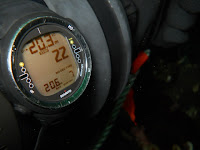
Ensure to check your Depth
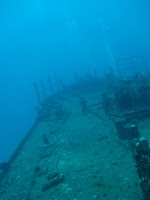
Wreck Diving does get deep
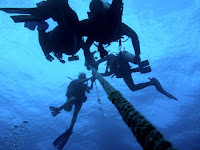
Safety Stops are a must
If you’re planning a deep dive, plan for all reasonable contingencies. Use redundant equipment for vital things like your depth gauge (probably the most important redundancy). Carry at least one dive light, but a secondary is never a bad plan. Talk to local divers and find out the conditions that you might be facing when you get to the bottom. If it’s a wall dive, watch your depth gauge(s) like a hawk! Some computers can be set for deep stops, so this is a good option as well. Situational awareness is a trait that good divers seek to develop as much as possible over their diving careers. In a deep dive, it’s as important as it would be on a night or wreck dive. Paying attention to your depth, watching your dive buddy and yourself for narcosis and keeping track of your air are the most key things to watch. And finally, brush up on your certifying agencies emergency decompression stop rules and write them on your slate so you don’t forget. You’re already increasing your risk of DCI, so there’s no sense increasing it further by blowing your tables and not taking the needed stop. Safety stops aren’t optional with deep dives!
Ensure to check your Depth

Wreck Diving does get deep

Safety Stops are a must
If you’re planning a deep dive, plan for all reasonable contingencies. Use redundant equipment for vital things like your depth gauge (probably the most important redundancy). Carry at least one dive light, but a secondary is never a bad plan. Talk to local divers and find out the conditions that you might be facing when you get to the bottom. If it’s a wall dive, watch your depth gauge(s) like a hawk! Some computers can be set for deep stops, so this is a good option as well. Situational awareness is a trait that good divers seek to develop as much as possible over their diving careers. In a deep dive, it’s as important as it would be on a night or wreck dive. Paying attention to your depth, watching your dive buddy and yourself for narcosis and keeping track of your air are the most key things to watch. And finally, brush up on your certifying agencies emergency decompression stop rules and write them on your slate so you don’t forget. You’re already increasing your risk of DCI, so there’s no sense increasing it further by blowing your tables and not taking the needed stop. Safety stops aren’t optional with deep dives!
Planning and conducting deep dives is a big part of diving for me and many other people, particularly the Tec set. While you are able to go to whatever depth you want, it’s good to get the extra training (and master Dalton’s Law) before you just plunge in. 40m is a long way from the surface and a safe dive is a good dive!
Monday, December 8, 2008
Dive safety basics
You've had a physical, you're certified and your diving equipment has passed inspection. For a safe, enjoyable dive, follow these additional tips, starting with two oft-repeated diver's sayings.
- Never dive beyond the depth of your experience. Don't try a dive you're not comfortable with, and stay out of wrecks and caves unless you've had professional instruction and are properly equipped.
- Plan your dive, and dive your plan. Know how far you'll descend and how long you'll be underwater. Use your dive computer—and your common sense.
- Always dive with a buddy. Before you enter the water, review hand signals and your diving plan. Review buddys gear, hand signals, and diving plan before entering the water.
- Never hold your breath. If your regulator comes out of your mouth, emit a tiny stream of bubbles until you get it back in.
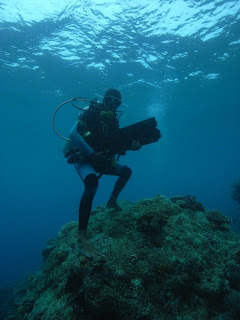
- Equalize your ears on the way down.
- Ascend slowly.
- Be comfortable and confident in your basic skills before taking on the additional requirements of underwater photography.
- Stay alert to your environment, including marine life, weather conditions and boat traffic.
- Don't fly for 24 hours after a no-decompression dive.

Know your diving destination
Before you get in the water, get the scoop on your diving destination. Find out all you can about water clarity, temperature and depths, as well as boating traffic and diving regulations. These factors affect what diving equipment you'll bring and help you plan your dive.
Is the water murky, or clear enough for a camera? Are there sunken boats or other must-see underwater structures? How far off shore, and how deep? How do the tides behave?
Search online for area dive shops and club contact information. Local divers can tell you what to expect and give you tips, like the GPS coordinates of an interesting wreck. Call for up-to-the-minute condition reports, even if you've recently visited the area. Conditions can change quickly, and having the latest details helps you plan a successful diving trip.
How long does one tank of air last?
The rate at which you use air while diving depends on factors such as the depth of your dive, the temperature of the water and your exertion level. Diving 15 to 30 feet in warm, quiet water, you can spend about an hour underwater with an average tank.
Divers use pressure gauges to measure the amount of air remaining in a tank. A handy instrument like the UWATEC; 2 Gauge Console combines a pressure gauge with a depth gauge. Add the optional C-1 Compass, and you can quickly determine how deep you are and in which direction you're swimming-information that lets you range farther from the boat with confidence and safety.
Computers can help your diving
A dive computer delivers key measurements for safer, more accurate diving. Today's sophisticated computers track how long you've been under water and the depth of your dive; calculate the amount of nitrogen in your body; and guide you in making decompression stops as you ascend. Even more advanced dive computers take into account factors such as water temperature, diver exertion to determine remaining bottom time before you need to begin a safe ascent to the surface factoring in any decompression stops needed with a safe backup supply of air.
Such precise nitrogen management makes it possible for divers to go deeper and stay underwater longer without compromising safety. Instead of calculating your dive profile with tables based only on the elapsed time and the deepest point of your dive, you have a profile that considers all the real-life variables. Using a dive computer, you may be able to double the length of your dive.
The Aladin TEC 2G wrist computer, made by UWATEC®, is accessible, easy to use and packed with features. It combines dive functions with an altimeter, average depth indicator and gauge mode with stopwatch functions. SmartTRAK software lets you download and manage dive profiles using your home computer.
What's a diving regulator?
A diving regulator supplies you with air or a special mix of breathing gases from a cylinder you carry on your back. Diving equipment manufacturers make a range of regulators for different environments and diver preferences.
There are typically four components to a regulator system: first stage, second stage, alternate, and gauges. The first stage attaches to the tank, converting high-pressure air to intermediate pressure. The second stage converts the intermediate-pressure air to breathable pressure. The alternate is a backup regulator, and the gauges measure air pressure and depth.
Transporting your dive gear
Diving gear transportation can be as simple as a luggage trolley with a plastic box and bungee cords, or as elaborate as a water resistant case that opens from two directions.
The basics include a mesh bag for rinsing and carrying fins, and a pouch to protect your gauges. Try the faithful stubbie holder on this. Just cut one end out and slid over your gauges. Wheeler Bag doubles as a gear bag with a sturdy telescopic handle and can be transformed into a backpack bag for more intense exploration.
Look for a case with plenty of pockets to organize your gear; a hard-sided, padded compartment to protect breakable equipment; and telescoping handles and easy-glide wheels for comfortable travel. Consider packing a mesh rucksack to use as a transition bag. When your gear arrives at your dive destination, leave the traveling bag in your room and head out with the lighter rucksack.
Choosing the right dive accessories
Diving equipment manufacturers offer an abundance of accessories for use in and out of the water. Here are just a few to consider.
Dive knives are not weapons, but tools-for cutting line, rope, netting or kelp; for adjusting or repairing equipment; even for signaling, with the butt end. Look for stainless steel models with sheaths. Look for stainless steel or Titanium models for corrosion resistance.
New LED and miniature HID lamps offer brighter, more penetrating beams of light. Remember to use sparingly to protect sea creatures.
Use a diver's log made of waterproof paper to keep records of up to 50 dives. And when you get home, store your gear on a specially designed hanger that keeps everything together in a compact space.
One major piece of equipment you might also want to get before buying all the fangangle paraphernalia is a inflatable Safety Sausage or Safety Marker. These things are a must to have on most boats these days and you local dive shop will have them.
Choosing the right mask
Fit is the most important quality of a good diving or snorkeling mask. You want a mask that doesn't leak as you move through the water, no matter which way you turn your face. Mask manufacturers offer models to fit different face sizes and shapes.
Low-volume masks, typically with a two-piece lens, are smaller and require less effort to clear if water fills them. A single-lens mask is usually larger, with seamless side windows creating a panoramic view. Wear glasses or contacts? You can get prescription lens masks from specialty suppliers.
Look for a durable frame and a strap that's easy to adjust even if you're wearing gloves. Good-quality diving masks feature a sealed silicone skirt that thins toward the edge, enhancing fit and comfort. A double-skirted mask has a second skirt at the upper edge, for a better seal.
High-end masks feature a purge valve for easier cleaning. The one-way purge valve lets you clear the water out of the mask without letting water in.
Clean your mask regularly with dishwashing soap and lukewarm water. You'll preserve the quality of its seal and prolong its life.
Choosing the right fins
Fins for snorkeling and diving come in two basic styles: the adjustable open heel and the full foot. Divers can use open heel fins in any environment, adjusting the fins to fit over bare feet or neoprene diving boots. Full foot fins encase the entire foot and are designed for warm-water diving and snorkeling.
The biggest news in fins in recent years is the revolutionary Twin Jet Max Fin, delivering more forward motion with much less effort than traditional fins. The innovative split hydrofoil shape, inspired by the tail of a humpback whale, makes the Twin Jet Max Fin one of the most efficient fins in use today. It comes in both adjustable and full-foot models.
Whatever style you choose, your fins should fit snugly-no wobbling or sliding. Straps should hold the fin comfortably in place, without cutting into your foot or squeezing the ball of your foot into the fin. The fin becomes a natural extension of your foot and leg, propelling you smoothly through the water.
Choosing a buoyancy compensator
Divers wear a buoyancy compensator (BC) to control ascent and descent rates or to hold steady underwater, at neutral buoyancy. Your BC should offer you flexibility underwater and stability at the surface.
Look for a BC that suits your body type. It should fit closely to minimize drag but give you freedom of movement at the shoulder and waist. There are on the market BC's that are designed especially for a woman's torso, optimizing weight distribution and carrying comfort.
Also match your BC to your diving preferences. Do you dive in both cold and warm water? The BC should adjust easily for wetsuits of different thicknesses, or for no wetsuit at all. Do you head for the deepest depths? Choose a BC that has a firm yet flexible cummerbund to compensate for wetsuit changes as you descend. Do you carry lights and other accessories? Look for D-rings and conveniently placed pockets.
I have found when buying a BC, that if you really don't care what colour it is, that there are a lot of commerially dsigned and made brands out there that do the same job and are more cheap. Hunt around for a Scuba Discount store and ask all the questions. Sherwood have a lot in this range and most discount stores have last seasons BC, that is if you vain and or need to latest and greatest. My rig is a AVID, it is intergrated and comes with all the mode cons, and cost me $380 AUD compared to a Cressi or ScubaPro that has the same setup and pretty colours and costs @4 times more.
Hey in the long run it your choice.
Inspecting your equipment
Plan on taking a trip to the dive shop before your next trip for a full inspection.
Have pros check your buoyancy compensator, regulator, hose and connectors. Make sure your tanks are functional and completely filled.
Run your own check of the rest of your equipment. Does your wetsuit still fit properly? A suit that's too loose lets in water, negating its insulating effect. Too tight, and it restricts your movement. Your mask should be tight and your fins snug, with no wobbling.
Take the time for regular diving equipment inspection-and make your time under the water thoroughly enjoyable.
Choosing the right wetsuit
Choosing the right wetsuit is essential to diving comfort. Your wetsuit helps you maintain proper body temperature even on a 30-foot dive in ice-cold water. It's like another layer of skin between you and the aquatic elements, making it a vital piece of diving gear.
Look for a wetsuit designed for your body type and preferred diving conditions. If you generally dive in warm water, you need less protection. Check with your dive shop for "tropical" models.
Cold-water diving calls for thicker material, providing enhanced insulation. Options include a full-length suit, or a layered combination of a jacket and overall style. Don't forget boots and gloves.
The depth of your dive also makes a difference in the wetsuit you choose. As you go deeper, neoprene, the synthetic rubber used for most wetsuits, compresses, losing some of its insulating property. Start with the proper thickness, and you'll stay warm.
Browse the websites of top wetsuit manufacturers like SCUBAPRO, CRESSI etc, and other companies that have outfitted many divers for diving in both tropical and icy environments.
The mid-range SCUBAPRO line, constructed of N2S neoprene, offers divers comfort and flexibility in any diving situation, from steaming tropical coastlines to polar bear waters. Check the SCUBAPRO; website for a fitting chart and dealer contact information.
Sunday, December 7, 2008
Equipment Care
Caring for your wetsuit
Cleaning your wetsuit prevents odors and extends the life of your diving gear. Rinse your suit inside and out in fresh water after the day's diving is done. Back home from your dive trip, clean your wetsuit thoroughly before storing.
You can soak your wetsuit in a bathtub of lukewarm water, using a wetsuit shampoo, mild dish soap or Woolite. Remember, don't run your suit through an agitator-style washer, which could cut the fabric. Consider buying an inexpensive plastic barrel. Put all your gear inside, and add soap and water.
While your wetsuit is soaking in the soapy water, move all the zippers up and down to get rid of any particles that remain from your diving trip. Rinse and hang to dry.
Make sure your wetsuit is completely dry before you store it. Hang in a cool, dry place, away from direct sunlight. Use a special wetsuit hanger created by diving manufacturers to avoid creasing or stretching.
Subscribe to:
Posts (Atom)