Showing posts with label Travel. Show all posts

Sunday, July 1, 2012

Real-life mermaid swims with whales


Underwater swimmer Hannah Fraser has been fascinated with mermaids since she was three years old. Hannah, 36, an Australian who now lives in LA, made her first mermaid tail at the age of nine, after seeing the film Splash with Daryl Hannah. Now she works as a model, actress and performer, swimming with whales, dolphins, stingrays and even sharks.


Stunning: Photographer Ted Grambeau captured beautiful photographs of 36-year-old Hannah Fraser swimming with whales in the wild to promote their conservation.

Hannah can hold her breath for up to two minutes and swim to depths of 45 feet, allowing her to move like a real mermaid, without the restraints of diving gear.In these images she is seen swimming with humpback whales off Vava'u Island, Tonga, to promote marine conservation and oppose whale hunting.


Hannah and her then husband Dave Rastovich, a surfer, were upset and frustrated after International Whaling Commission meetings where whaling nations were allowed to continue their slaughter under the guise of 'scientific research'.'It was depressing and we wanted to go somewhere to connect with the whales and to raise awareness,' said Hannah.


The couple flew to Tonga with photographer Ted Grambeau, who was able to capture beautiful images of humpbacks swimming with Hannah, in scenes documented by filmmaker Bali Strickland. 'A baby humpback was curious and actually came up to me,' said Hannah. 'The whales were singing so loudly and the baby whale was squealing, which sounds even louder under the water. It was a very powerful experience.'


Many photographs for anti-whaling campaigns show brutal acts including harpooning and whales being winched onto ships, which can be too horrific for ordinary observers. But Ted's images appear in the children's book, The Surfer and the Mermaid, and aim to inspire whale conservation. He added: 'All the shots of Hannah are really poetic - really just surreal, beautiful shots.'


In 2007, Hannah swam in the sea in Taiji, Japan, with 30 surfers, celebrities and musicians, in an attempt to halt the ruthless slaughter of thousands of dolphins by local fishermen. Hannah remembers: 'Half of the dolphins had been caught and the others were roped off in the middle of the bay to be herded towards the fishermen.


Deep blue: Hannah is seen here swimming with humpback whales off Vava'u Island,
Tonga, to raise awareness of marine life and oppose whale hunting

'Instead of being frightened, the dolphins were trying to come closer to us in their net, as if they knew we wanted to help them. 'But at this point the fishermen were hitting us with sticks and moving their boat propellers towards us. We couldn't get any closer and we couldn't save the dolphins. 'It was indescribable to see this happening and have to abandon them. I cried for hours afterwards. It was hard to be part of the human race at the point.'


Two years later, in 2009, Hannah swam in her tail with 14ft Great White Sharks off Guadalupe island, Mexico. 'I thought if I was going to be a professional mermaid I'd have to face my fear of sharks,' she admitted. After trying out the shark-infested waters in scuba gear, Hannah was about to put on her mermaid tail, when one of the sharks became trapped in the diver's cage. 'Luckily the shark freed itself in time. But it made me realise it was safer not to use the cage,' she said.

'I got my tail on and got into the water. I was supposed to be surrounded by divers, but in the mermaid tail I swim much faster than anyone else. I realised I was on my own, but I stayed calm.'


She added: 'Another time a shark turned round and came towards me, so I made a scary face and screamed at it in the water. Amazingly I scared it off. I felt invincible for months afterwards.' Filmmaker Rob Benavides is currently shooting a documentary about Hannah's life, which will feature her work as a model, diver, and sea-life campaigner. 'One of the imperative messages in marine conservation right now is over-fishing,' she said. 'We should be asking countries to better regulate their fishing industries.


'We shouldn't be eating any fish, but if any it should be only little ones. Large fish take years to grow and reach maturity. If we continue taking them from the ocean it will be a long time before stocks are replenished.' Hannah Fraser is featured in a new children's book Last Night I Swam With A Mermaid by Kimberley Muller.


Inspiration: Hannah says she made her first fish tail after seeing Daryl Hannah play a mermaid in the 1984 film Splash

Wednesday, June 27, 2012

Immersed Senses

Improving the limitations of current scuba diving system, designer Adam Wendel has come up with a futuristic device named the “Immersed Senses” that changes the way the diver sees, hears, and breathes underwater, allowing them to become a part of their surrounding environment. Immersed Senses is the future of underwater diving and exploration. Featuring a LED flashlight to let the diver to observe the dark depths of the ocean, the mask also includes a large OLED glass display to offer a panoramic view of the surroundings. The OLED enclosed helmet also allows the extracted oxygen to flow freely throughout the helmet, as if you are breathing on land without any breathing apparatus.


While an interactive OLED display gives access to underwater GPS maps, therefore allowing the diver to navigate efficiently throughout the ocean’s landscapes. The OLED also offers software that can identify all species of fish, coral and other ocean dwelling creatures that diver is currently viewing. With Immersed Senses, experiencing the underwater world is now fully interactive. In addition, the OLED screen depicts important info such as oxygen toxicity, nitrogen levels and even body heat to keep the diver well informed and safe.

Made in haptic glass, the device concept touts futuristic technology to the core. An optically clear glass with microscopic pours keeps water molecules out, yet it allows sound waves to pass through. Sound travels six times faster underwater than on land, however it is nearly impossible to interpret where the sound is coming from. The haptic glass interprets the sound wave orientation then displays the source and direction on the OLED display.

Water leakage is eliminated with the use of a silicone lining that seals the helmet to the skin. The silicone’s flexibility affords the diver to explore with comfortable movements. The orange side panels assist in internal circulation of the extracted oxygen. The rear of the helmet contains an electrolysis reactor that extracts oxygen from saltwater. The breathable oxygen is circulated throughout the helmet, creating a revolutionary underwater breathing experience.

Immersed Senses operates by a battery that utilizes a centrifuge mechanism to pull oxygen from seawater that begins the electrolysis reaction. Saltwater is extracted into the bottom reservoir that reacts with hydrogen gas. The saltwater is then charged by a positive and negative anode/cathode that generates breathable oxygen. Two internal devices help to circulate the oxygen to the diver’s mouth and nose.

The diver then breathes in the oxygen and out carbon dioxide, which exits the helmet. The battery and stored hydrogen can keep a diver submersed for up to 8 hours. The Immersed Senses revolutionizes how a human can breathe underwater, as well as interact with the OLED display offering a panoramic view of the deep sea.


Dubai's Planned Underwater Hotel

shipbuilder Drydocks World has signed on with Switzerland’s BIG InvestConsult, on behalf of partner Deep Ocean Technology (DOT), to become the sole construction contractor of the futuristic Water Discus Underwater Hotels in the Middle East. Tailored to the luxurious lifestyle, aspiring divers and marine life enthusiasts, the patent-protected concept by DOT is comprised of disc-shaped volumes that are both above and below the water’s surface, exploring the depths of the ocean while taking advantage of the warm climate.

The single water discus module works as an independent structure, with the possibility of joining other modules to create a larger resort complex. Each module consists of two discs; one disc is submerged ten-meters underwater and the other floats five to seven-meters above the sea’s surface. Both parts are connected by three structural “legs” and a vertical shaft containing a lift and stairway.

Enormous panes of glass frame the vibrant sea life within each of the twenty-one private rooms, located in the underwater disc. A special lighting system is integrated within each room, allowing visitors to illuminate the water world and view the sea creatures. Adjacent to these rooms is an underwater dive center and a fully stocked bar.

The above-water disc is comprised of a restaurant, spa, a special recreation area and a multifunctional lobby that is built inside an enormous swimming pool. The swimming pool can be accessed by the roof, along with a rooftop garden and the helicopter pad.

The safety of the occupants is placed at high priority. The structure is designed to withstand the most adverse weather conditions. And, in the event of any danger, the underwater disc will automatically surface. However, one must question the safety of the marine life if this hotel is constructed. DOT highlighted the fact that each disc is sized according to the local condition and has the ability to be relocated if “any changes in the environmental or economic conditions occur”.

Technology: Lech Rowinski (Technical University of Gdansk)
CEO: Arkadiusz Majerski
CFO: Jacek Zdrojewski
Company’s Development : Grzegorz Malenczuk
Architecture: Pawel Podwojewski
Executive Creative Director: Pawel Podwojewski
3D Artist: Dimitriy Belozertsev at MOTYW

Reference: Deep Ocean Technology, World Architecture News


Friday, June 8, 2012

I can SEA clearly now

Paul Watson, the founder of Sea Shepherd Marine Wildlife Conservation Society has been released. He was bailed from a Frankfurt jail pending a decision on whether he will be extradited to Costa Rica, where he is wanted for supposedly endangering a Costa Rican fishing vessel whilst filming a documentary back in 2002.

On Friday (18th) a Frankfurt court ruled that he could be released on bail for around £200,000. A mystery donor stepped in and he was released on Monday (20th).The Captain was relieved to be out, “I didn't expect something that happened 10 years ago to sneak up on me in Germany.”

Watson must remain in Germany while the extradition case gets haggled over.

Luckily for Paul the Costa Rican President Laura Chinchilla was in Germany on an official visit trying to drum up more foreign investment from Chancellor Angela Merkel. By the time she had arrived in Berlin more than 400 Sea Shepherd supporters had shown up to greet her.

Sea Shepherd called for a global day of action on Wednesday (23rd) asking people to go and stand outside German Embassies and protest. Demonstrations took place outside the German embassies and consulates in Hong Kong, Australia, Canada, US, South Africa, Brazil, Spain, Costa Rica and many other countries.

Keep checking SEA SHEPHERD website for news and updates.

Underwater Photography at it's best

‘Untitled’ – Sweetlips in an unspecified location
Photograph: Jose Alejandro Alvarez/Barcroft media

‘Are you looking at me?’ – Jack fish in Sipadan, Borneo, Malaysia
Photograph: John Hill/Barcroft Media

‘Continental trench’ – A diver in a continental trench in Silfra, Iceland
Photograph: Magnus Lundgren/Barcroft Media

‘Harlequin shrimps’ – Harlequin shrimps in Tulamben, Bali, Indonesia
Photograph: Francesco De Marchi/Barcroft Media

‘Lion Fish’ – A lion fish with schooling glassfish in the Red Sea, Egypt
Photograph: Amir Stern/Barcroft Media

‘Multitude’ – schooling catfish in Indonesia
Photograph: Acevedo Eduardo/Barcroft Media

‘Hitting sailfish’ – Sailfish attacking schooling fish in Port St Johns, South Africa
Photograph: Alexander Safonov /Barcroft Media

‘Schooling Jacks’ – Diver and schooling jackfish in Indonesia
Photograph: Maria Rivarola/Barcroft Media

‘Stargazer’ – Stargazer in Blue Heron Bridge, Florida
Photograph: Keri Wilk/Barcroft Media

‘Struggle for freedom’ – Baltic herring inside a net in Baltic Sea
Photograph: Karel Bernard/Barcroft Media


Thanks to Keri’ – Juvenile flying fish in Raja Ampat, Indonesia
Photograph: Michele Davino/Barcroft Media

‘Underwater Sadness’ – A sea turtle caught in a net in Sea of Cortez, Mexico
Photograph: Ramon Dominguez/Barcroft Media

Tuesday, July 19, 2011

10 Easy Steps to Protect Coral Reefs

Feel overwhelmed by global climate change? Ocean acidification? Worldwide coral bleaching?

There ARE ways you can make a positive impact on this Earth and help preserve precious coral reef systems, whether you are a scientist, policy-maker or concerned citizen.

1. Learn and Educate. Read, watch and listen to everything you can about marine conservation and coral reefs and share what you learn with others. The more you learn, the more informed your actions to protect our oceans & reefs will be. At Project Blue Hope, we try to keep you as up-to-date as possible with the marine conservation, policy and science news.

2. Petition the Government. You have a voice, so use it! Contact your government representatives and call for increased protection for coral reefs via the expansion of marine protected areas. Demand the pollution of our oceans be put to an end.

3. Support “Green” Business. Businesses that are eco-friendly are also reef-friendly. Only use your money to support businesses that are dedicated to sustainable practices. A good way to find such establishments is via the National Green Pages. Also, if you own stock in a company, you can use your proxy ballot to push big businesses to “go green” and stop destructive fishing practices.

4. Volunteer on Vacation. If you don’t live near a coral reef, then go on vacation to visit one and volunteer at the local marine park. There are many organizations, such as REEF, Blue Ventures and Oceans Watch, that you travel with to volunteer your diving skills and do coral surveys and ocean clean-ups.

5. Use Only Organic/ Eco-Friendly Fertilizers. Even if you live far inland, fertilizer products still flow into the water system. Ultimately, fertilizers will run out to pollute the sea and harm coral reefs and marine life.

6. Consume Sustainable Seafood. Practice mindful eating and don’t consume overfished Bluefin Tuna, Atlantic Cod, Blue Marlin, Chilean Seabass, Farmed Salmon, Snapper or Grouper (to name a few). Seafood Watch’s pocket guides and online database are useful tools for determining whether your seafood is sustainable or not. If you are at a restaurant that serves these fish, fill out a comment card or talk with the chef to voice your opinion about their unsustainable seafood menu choices.

7. Lower Your Carbon Footprint. Help reduce pollution by walking, biking or utilizing public transportation vs. driving. Global (and ocean) warming is largely due to fossil fuel emissions from cars and industry, which leads to coral bleaching (and death). Also, planting a tree helps reverse global warming and reduce run-off into the seas.

8. Dive & Snorkel Responsibly. If you have the privilege to slip beneath the ocean’s surface, please, do not touch the reef or anchor your boat on the coral. Corals are delicate animals, despite their “rocky” appearance, and contact with the coral can damage and sometimes kill them.

9. Use Less Water. When you use water conservatively, you create less wastewater and run-off that will pollute our oceans. Also, properly dispose of your trash, as litter that ends up in the sea can harm fish & the reefs.

10. Spread the Message of “Blue Hope.” As divers, we have a close association with coral reef systems that few get to experience. The profound respect and wonder we feel for the oceans is a feeling we should all try to share. Share your excitement for coral reefs and commitment to protecting them with as many people as you can.

These ten action items are easy, yet effective when enacted collectively. Your actions and the actions of your local community can make a difference every day.

Tank Cave - Cave Diving Australia

Cave Name: Tank Cave
Reference: 5L-230
Cave Area: Lower South East
Description: Named because a water tank used to rest right over the top of the entrance, Tank Cave is an extensive, maze like system with over 8km of diveable passage which makes it one of the longest underwater caves in Australia.
Owner/Manager: Rob Dycer
Access: Via CDAA. Cave leased to CDAA..

The South Australian region near Mt Gambier is known of it’s many sinkholes and caves. One particular cave that stands out amongst the rest is Tank Cave. Tank Cave is probably the most complex and biggest cave system in Australia, with more than eight kilometers of underwater passages. The cave is relatively shallow a max depth around 65ft (20m). This system gets its name from the fact that there used to be a water tank directly over the top of the entrance.

Rumored since the late 1960s as a “cave diving site” of some type, this amazingly extensive feature is today considered by many to be the the best cave diving as far as South Australian cave diving sites

The Tank Cave entrance is on private property and the Cave Divers Association of Australia (CDAA) strictly control access to the dive site. The complicated nature of the cave system, requires a strict familiarization process that allows cave divers to get to know the cave step by step. You must go through this process before you are allowed access to the site, the clear benefit means that every cave diver is very familiar with all the main passages of Tank Cave before they can explore further.

GoPro HD HERO camera: Holly Beck and the Whaleshark

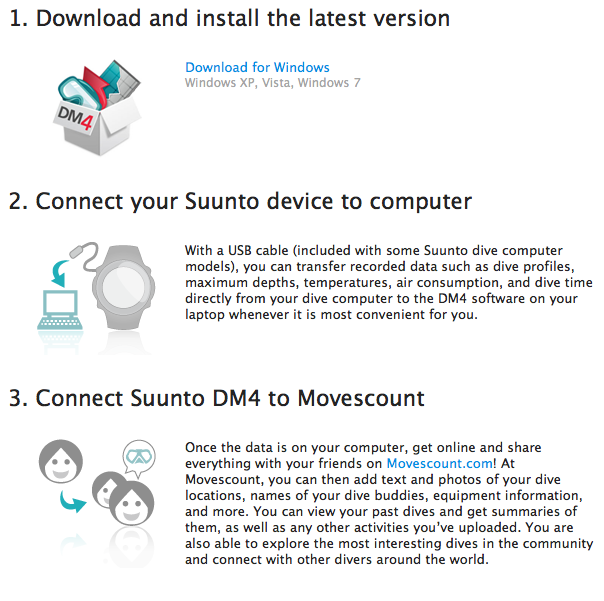
Suunto Movescount & Scuba Diving

New to the diving community is the revolutionary Suunto Movescount, a user friendly tool to share all of your sporting activities with the world. Mainly this community has been used for runners and bikers to share and record their times, as well as gain likes and achievements through the website.

Suunto has decided that they should give divers an equal opportunity to share their exciting dive adventures. Movescount is a great visual tool for you to gain instant satisfaction from posting your dives to the world and sharing them with other divers. With Movescount you can also log your own personal achievements without sharing with others if you’re feeling a little anti-social, or just want to surprise the world at a later date!


Scuba diving has been looking for a tool like this, and with Suunto being one of the leading suppliers of dive equipment it only seems fitting that they would have the tools to make this happen. The website has a nice interface, almost “Facebook like”, giving you the ability to add fans, follow athletes, join groups and customize your own profile. A digital logbook if you will, with the ability to access from anywhere at anytime. This is a also a great tool for finding new dive buddies and connecting with people that you have met through the site. So bringing your laptop on vacation can now be mixed with your dive computer to record even more information about your awesome dives, and to record your bottom time accurately. This is not ONLY a tool to record your scuba diving activity, it has almost every sport you can think of, and from martial arts to badminton you can record ALL of your sporting activities.

Every good technology company knows, if you make a web interface for your industry, you should most definitely make a tool to use it on the fly! Like the new Suunto D6i, which allows you to easily upload and store all of your dive information directly from your laptop to Movescount.com. The watch itself is not different in any way from the D6, adding an “i” has only given it the ability to transfer directly to the website without any data having to be input by the user. The Suunto D6 is a great wrist computer that could easily pull off being an expensive wrist watch. When I travel and teach scuba diving my D4 never leaves my wrist, maybe it is time for me to upgrade to the D6i and start tracking my moves! This technology is new, and will begin to be a very exciting craze of sharing your healthy movements to your friends and newly acquired fans.

You can take a tour of Suunto Movescount by Clicking Here

Check out www.scubadiverlife.com to learn all about diving if you aren’t a scuba diver already, if you are; check us out and then head over to www.movescount.com and sign up for your account!

Saturday, July 2, 2011

Project AWARE

Project AWARE Foundation works in partnership with divers and water enthusiasts to combat challenges facing underwater environments. We involve these volunteers in hands-on environmental activities like International Cleanup Day and The International Whale Shark Project. Project AWARE also inspires conservation by incorporating its messages in dive training materials as well as creating awareness and education campaigns like Protect the Sharks, Protect the Living Reef and AWARE Kids. The Foundation Grant Program funds grass-roots environmental projects that address key foundation focus areas, volunteer-supported community activism and critical research with direct contributions made by people like you. Follow cause on Facebook

Donations Go To…

PROJECT A W A R E FOUNDATION
A 501(c)(3) nonprofit

Positions

  1. Dive carefully in fragile aquatic ecosystems, such as coral reefs.
  2. Be aware of your body and equipment placement when diving.
  3. Keep your diving skills sharp with continuing education.
  4. Consider your impact on aquatic life through your interactions.
  5. Understand and respect underwater life.
  6. Resist the urge to collect souvenirs.
  7. If you hunt and or gather game, obey all fish and game laws.
  8. Report environmental disturbances or destruction of your dive sites.
  9. Be a role model for other divers in diving and non-diving interaction with the environment.
  10. Get involved in local environmental activities and issues.

Sea Shepard Cause

Please join the following Cause. These guys are called pirates but without them, the sea's/oceans are a free for all slaughter house, the marine life can't fight or talk for themselves, so please help out.


About

Sea Shepherd is a direct-action conservation group lead by Captain Paul Watson, a man whom author Farley Mowat calls "the world's most aggressive, most determined, most active and most effective defender of wildlife."

Join the official facebook page!
http://www.facebook.com/seashepherdco...

Goto the website. http://www.seashepherd.org/

Tell your friends.

Affiliated With

SEA SHEPHERD CONSERVATION SOCIETY

Donations Go To…

SEA SHEPHERD CONSERVATION SOCIETY
A 501(c)(3) nonprofit

Positions

  1. Defend
  2. Conserve
  3. Protect
A One Dollar from everyone who visits, will make a load of difference. Tell your friends as well. I'm sure you can spend a dollar, or have a look at there shop and purchase something cool, which also is a donation.