Showing posts with label Dive training. Show all posts

Monday, June 11, 2012

Sexy Diver - Jessica Alba

Do you want to be a sexy diver? Need to get fit? Now we have the reason why Jessica Alba looks like this. So how can you become the next Jessica Alba thanks to Scuba Diving…

Think of the amount of calories you loose while scuba diving.

Here we go:

Shapely legs: Swimming with fins (flippers) is like water-based weight-training – firming the front of the thighs as you kick down and the back of the thighs as you kick up. 4 stars

Weight loss: Surprisingly good for burning energy. Someone weighing approximately 70kg (11st) burns 13 calories a minute while scuba diving, so a 45-minute dive would use 585 calories. 3 stars

Cardiorespiratory fitness: According to the British Thoracic Society, scuba divers tend to have larger-than-average lungs and an increased vital capacity (the maximum volume of air exhaled after inhalation). 4 stars

Upper-body strength: The back, shoulders and arms get a certain amount of work lugging around equipment, but once in the water, the upper body gets off lightly. Arms are usually folded across the chest or kept by the sides. 2 stars

Convenience: Even if you decide to dive in the Australia, it’s still an equipment-heavy, location-specific, expensive sport that requires a licence, and therefore tuition. 1 star

Friday, June 8, 2012

Packing Tips for Photographers

It used to be so easy to get to distant dive locations with virtually any amount of camera gear needed to do the job. Load up a dive bag, a clothing bag, maybe a big roller case for topside cameras to go on the airplane with you--then stuff the rest in a giant hard case. Some shooters had different strategies, maybe an Igloo cooler with the lid duct-taped down to make it look like a cargo of dead fish rather than live cameras, hoping to avoid theft. But the common feeling was that overweight was an after-thought, and if we got charged at all, it would be maybe $50. But as Mr. Dylan once sang, "the times they are a-changin'," and as fuel costs force airlines' bottom lines deeper into the red, they pass some of those costs along to their passengers in the form of baggage fees. Underwater photographers get hit especially hard, so for shooters feeling the pinch, here are five tips for packing, planning and navigating baggage restrictions on your next dive trip.

To emphasize how significantly times have changed, I just came home from an otherwise terrific trip to the Red Sea. To get there, I went via London on an international carrier, which wasn't overly restrictive. But I connected with a charter flight to Marsa Alam, Egypt--low-cost charter flights with few amenities are a common choice for divers traveling from Europe--and that carrier was extremely restrictive in its baggage allowance, with astronomical overweight charges. What's the lesson here? Know what you're in for ahead of time. Domestic U.S. flights, which may include flights to the Caribbean and Mexico, international flights and charter flights often have different baggage allowances and fees. For each carrier you're ticketed with, check the web site for updated information about baggage allowances and fees for the type of flight you're on so you can pack and budget according to the most restrictive leg of your trip.

The overweight charge on my charter flight to Marsa Alam was about $6.81 per pound. Each passenger was allowed 55 pounds for the combination of dive gear, clothing and camera equipment. Normally I travel with two 60-pound cases, one hard case for housings and strobes and one dive bag for gear and clothing. That's 120 pounds, and then I have a wheeled carry-on case for my topside cameras that weighs another 40 pounds. If I traveled as normal, I'd have been 105 pounds overweight, paying $715 in overweight fees, each way. Sometimes, you'll get lucky. Going to Marsa Alam, I didn't get charged any fees, but I took that to be luck-of-the-draw in getting a generous gate agent because other travelers with the same amount of baggage or less got thoroughly hammered. On my return flight, I got one particularly strict baggage inspector who hit me with $600 in overweight charges. Pack and weigh your bags well ahead of time, and do the math to figure out the maximum cost in fees you may incur. Then budget this amount into the cost of your trip to avoid spending more than you planned. A handy little travel tool is Balanzza--balanzza.com--a lightweight digital scale that will tell you exactly what your bags weigh, in pounds or kilos.

Not every shoot requires the same gear, and it's rare that one destination requires every piece of equipment I have. For the Red Sea I shot predominantly wide-angle because the area's signature scenes are massive schools of fish and lavish soft coral formations punctuated by brilliantly colored tropical reef fish. All these features were so compelling there was no way I was shooting macro. So I left my flat port and macro lenses at home. If overweight charges will be a problem, plan your shoot according to the best photo opportunities at the destination, and leave the rest behind.

Underwater photographers need to accept that airlines are going to make money any way they can, and hitting us for overweight is likely to be the their easiest, quickest revenue-generator. To avoid being lambs-to-the-slaughter, we need to get clever in terms of how we pack. The most fragile and irreplaceable items should come aboard as carry-on. At the very least, carry-on a single digital camera body and a few primary lenses, as well as a laptop computer and portable hard-drive. Ideally, you would carry-on your housing as well--you might be able to rent a strobe on location if your checked baggage is lost or delayed, but you'll need the camera-specific housing. Having said that, I usually check my housing, just because it is big and heavy, but if you use a smaller, lighter housing, get it in your carry-on if possible.

When planning your packing strategy for a photo trip, don't forget your contingency plan. A good tool kit for field repairs can help minimize redundant equipment. If you can fix certain parts of your setup, you may be able to avoid the weight and expense of a spare. Here are some basic suggestions for your Save-a-Camera kit:

  • Spare camera body - If the worst happens and your housing floods, you can dry out the housing and go back to work. But the delicate camera electronics will most likely get fried. A second camera body of the same configuration allows for quick replacement of drowned gear, and makes those topside shots easier if your only camera isn't already encased in a housing.
  • Tools should include a small crescent wrench, vise grips and/or pliers, jeweler's screwdrivers, a pocket knife, small flashlight, air bulb, lens cleaning cloth and a device for cleaning dirty sensors. I use a brush from visibledust.com
  • Extra cords for the strobes, and if possible, a third strobe head so you've got a back-up for dual strobe work.
  • Spare O-rings for your housing and strobes, and extra O-ring grease, are must haves. And always make sure you use the type of grease recommended by the O-ring manufacturer. Mixing and matching different brands can cause O-rings to swell and fail.

Scuba Pro's Meridian Dive Computer

SCUBAPRO’s Meridian combines a classy timepiece with an advanced dive computer. The housing is made of marine grade 316-L stainless-steel with a two-toned brushed finish. The display uses bold digits and icons, and is flanked by four control buttons for navigating through the system. A full-featured wristwatch on the surface, when it comes time to hit the water the Meridian lets you choose between Scuba, Apnea or Gauge modes. All modes use an eye-pleasing reverse display backlight and can be equipped with optional heart rate monitors. After the dive, profiles and other data can be downloaded using SCUBAPRO’s LogTrak software, compatible with both the latest versions of Windows and Mac. Bottom Line: As a luxury watch and muscular data cruncher, the Meridian offers state-of-the-art performance, both under water and on the surface.

For more information:
http://www.scubapro.com
Find this product at your local SCUBAPRO dealer


Plastic Trash Altering Ocean Habitats

A 100-fold upsurge in human-produced plastic garbage in the ocean is altering habitats in the marine environment, according to a new study led by a graduate student researcher at Scripps Institution of Oceanography at UC San Diego.

In 2009 an ambitious group of graduate students led the Scripps Environmental Accumulation of Plastic Expedition (SEAPLEX) to the North Pacific Ocean Subtropical Gyre aboard the Scripps research vessel New Horizon. During the voyage the researchers, who concentrated their studies a thousand miles west of California, documented an alarming amount of human-generated trash, mostly broken down bits of plastic the size of a fingernail floating across thousands of miles of open ocean.

At the time the researchers didn't have a clear idea of how such trash might be impacting the ocean environment, but a new study published in the May 9 online issue of the journal Biology Letters reveals that plastic debris in the area popularly known as the "Great Pacific Garbage Patch" has increased by 100 times over in the past 40 years, leading to changes in the natural habitat of animals such as the marine insect Halobates sericeus. These "sea skaters" or "water striders"—relatives of pond water skaters—inhabit water surfaces and lay their eggs on flotsam (floating objects). Naturally existing surfaces for their eggs include, for example: seashells, seabird feathers, tar lumps and pumice. In the new study researchers found that sea skaters have exploited the influx of plastic garbage as new surfaces for their eggs. This has led to a rise in the insect's egg densities in the North Pacific Subtropical Gyre.

Such an increase, documented for the first time in a marine invertebrate (animal without a backbone) in the open ocean, may have consequences for animals across the marine food web, such as crabs that prey on sea skaters and their eggs.

"This paper shows a dramatic increase in plastic over a relatively short time period and the effect it's having on a common North Pacific Gyre invertebrate," said Scripps graduate student Miriam Goldstein, lead author of the study and chief scientist of SEAPLEX, a UC Ship Funds-supported voyage. "We're seeing changes in this marine insect that can be directly attributed to the plastic."

The new study follows a report published last year by Scripps researchers in the journal Marine Ecology Progress Series showing that nine percent of the fish collected during SEAPLEX contained plastic waste in their stomachs. That study estimated that fish in the intermediate ocean depths of the North Pacific Ocean ingest plastic at a rate of roughly 12,000 to 24,000 tons per year.

The Goldstein et al. study compared changes in small plastic abundance between 1972-1987 and 1999-2010 by using historical samples from the Scripps Pelagic Invertebrate Collection and data from SEAPLEX, a NOAA Ship Okeanos Explorer cruise in 2010, information from the Algalita Marine Research Foundation as well as various published papers.

In April, researchers with the Instituto Oceanográfico in Brazil published a report that eggs of Halobates micans, another species of sea skater, were found on many plastic bits in the South Atlantic off Brazil.

"Plastic only became widespread in late '40s and early '50s, but now everyone uses it and over a 40-year range we've seen a dramatic increase in ocean plastic," said Goldstein. "Historically we have not been very good at stopping plastic from getting into the ocean so hopefully in the future we can do better."

###

Coauthors of the study include Marci Rosenberg, a student at UCLA, and Scripps Research Biologist Emeritus Lanna Cheng.

Funding for SEAPLEX was provided by the University of California Ship Funds, an innovative program that allows a new generation of scientists to gain valuable scientific training at sea, Project Kaisei/Ocean Voyages Institute, the Association for Women in Science-San Diego and the National Science Foundation's (NSF) Integrative Graduate Education and Research Traineeship program. The NOAA Okeanos Explorer Program (2010 Always Exploring expedition) and National Marine Fisheries Service provided support for the 2010 samples. Other study support was provided by Jim and Kris McMillan, Jeffrey and Marcy Krinsk, Lyn and Norman Lear, Ellis Wyer and an anonymous donor. Other support was provided by the California Current Ecosystem (CCE) program, part of NSF's Long-Term Ecological Research (LTER) program.


Underwater Photography at it's best

‘Untitled’ – Sweetlips in an unspecified location
Photograph: Jose Alejandro Alvarez/Barcroft media

‘Are you looking at me?’ – Jack fish in Sipadan, Borneo, Malaysia
Photograph: John Hill/Barcroft Media

‘Continental trench’ – A diver in a continental trench in Silfra, Iceland
Photograph: Magnus Lundgren/Barcroft Media

‘Harlequin shrimps’ – Harlequin shrimps in Tulamben, Bali, Indonesia
Photograph: Francesco De Marchi/Barcroft Media

‘Lion Fish’ – A lion fish with schooling glassfish in the Red Sea, Egypt
Photograph: Amir Stern/Barcroft Media

‘Multitude’ – schooling catfish in Indonesia
Photograph: Acevedo Eduardo/Barcroft Media

‘Hitting sailfish’ – Sailfish attacking schooling fish in Port St Johns, South Africa
Photograph: Alexander Safonov /Barcroft Media

‘Schooling Jacks’ – Diver and schooling jackfish in Indonesia
Photograph: Maria Rivarola/Barcroft Media

‘Stargazer’ – Stargazer in Blue Heron Bridge, Florida
Photograph: Keri Wilk/Barcroft Media

‘Struggle for freedom’ – Baltic herring inside a net in Baltic Sea
Photograph: Karel Bernard/Barcroft Media


Thanks to Keri’ – Juvenile flying fish in Raja Ampat, Indonesia
Photograph: Michele Davino/Barcroft Media

‘Underwater Sadness’ – A sea turtle caught in a net in Sea of Cortez, Mexico
Photograph: Ramon Dominguez/Barcroft Media

Tuesday, July 19, 2011

Diving Apps for iPad owners

With the iPad growing in popularity (nearly 25 million of them around now) it was only a matter of time before divers would see dedicated iPad apps, we take a look at five of our favourites…

1) Dive Log $11.99

One of the more expensive iPad apps, but that reflects in it’s quality. Also available for your iPhone, Mac or Windows computer. Add dive locations, air mixes, bottom times and site statistics. Use photos of buddies, interact with Google Maps, capture GPS co-ordinates and build up a comprehensive dive log that can be easily accessed on multiple devices.

Dive stats are nicely presented; giving you overall bottom time, average depth and a host of other dive statistics. If you’re a tech geek and want something a little less soggy than a paper log book, Dive Log is worth every cent.

2) Dive Training $FREE


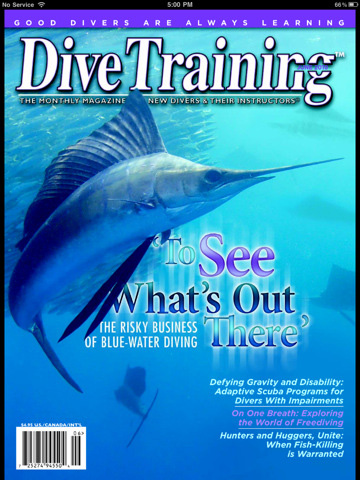
Most divers would have seen this magazine knocking around their local dive shop. Dive Training has a twenty year legacy dedicated to education-based articles. Well written and informative there is always something worth while in every issue for divers of all experience.

The App is free, as are the issues (at time of press) so there really is no reason to not have this on your iPad. Navigation is easy, but pages are taken directly from the print product, so don’t expect flashy animations and video content. It’s simple, effective and well worthy of your time.

3) London Diving Chamber


Firstly, you don’t have to be in London to benefit from this iPad diving App, the overall focus of which is health and medical attention. The LDC App has several simple elements, a pre-dive checklist focusing on physical checks, a simple but effective log book (not as comprehensive as the Dive Log, but a handy addition if the price tag of $11.99 puts you off the above) and a directory of medical terminology.

The LDC App can help you locate a Hyperbaric chamber, either by entering an area name, or by automatically using your current GPS location. Chambers can then be pin-pointed on Google Maps, incredibly good for making emergency action plans or when visiting new, unfamiliar dive sites.

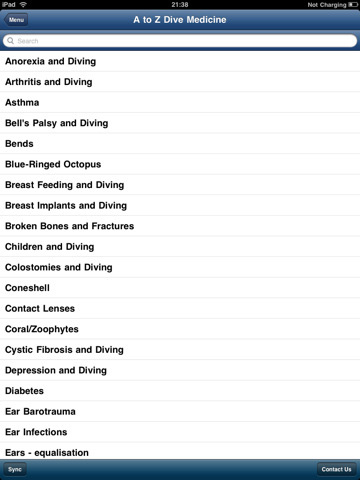
Finally they offer “Diving Incident”, a series of yes and no questions that help determine a medical problem within a diver. I’d recommend a PADI Rescue Diver course before searching in your dive bag for an iPad, but it’s a good learning tool if nothing else. Add to this a comprehensive A-Z of diving medical terms and you have an excellent, free iPad app worth it’s weight in led.

4) Earth Periodical $FREE


If you’re a diver, there is more than a fair chance you have a keen interest in conservation and exploration. Earth Periodical is a new, free magazine made just for you. Now in it’s second issue the magazine offers unique interactive content, original articles by experts, video content and interactive an quiz. All for free. What more could an avid carer of our planet ask for? Put simply it’s aim is to educate, entertain and inspire people. From saving sharks, to space shuttle Discovery, from natural history news to equipment reviews. EP aims to give you something interesting. Perfect for your surface interval or when you’re waiting for tanks to get filled.

5) My Reef Aquarium 3D HD $2.99


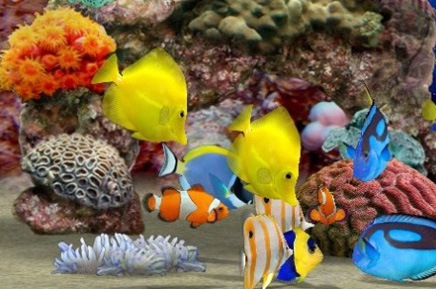
iPads do fun stuff. You need a balance between serious dive logs and entertainment. My Reef Aquarium 3D HD is basically an interactive aquarium for your iPad. Choose your tank, the background image and the fish that inhabit it. Feed the fish, knock on the glass to get their attention or simply sit it on your desk and day dream about your next dive in the Caribbean.

If you have young kids, this App will be the best thing you ever buy. Whether they are a year old or closer to ten, My Reef 3D HD will have them glued, interacting and best yet, quiet for hours! Worth the price alone.

Other Apps of interest:

iMixer EANx (FREE)

DIVE Magazine (Free App, pay for issues)

101 Most Popular Dive sites of the Red Sea ($9.99)

Navy Diving Manual ($4.99)

Open Water - Padi Certification

The open water course will be the standardized training which most individuals complete while studying diving. It’s recognized internationally and permits a diver to finish divings within all places worldwide. Upon completion of this course, you’ll be competent enough to dive within open water, and possess enough knowledge to remain safe. There’re several diving schools which provide PADI training, and you ought to have the ability to locate a great one within your local region without much complication. Many holiday places which are known for diving will possess diving centers which provide training for those who want to qualify for warmer surroundings.

The inital phase of the course will be a detailed theory module that covers every element of diving from technique and equipment to every vital safety aspect. It’s important that prior to somebody taking to the water, they possess knowledge of every one of the techniques involved. Discussing how the equipment operates, diving planning, breathing techniques, navigation and more, the theory portion of a course is made to offer the diver thorough knowledge of diving.

The practical portion of the PADI course practices everything that’s been studied within the theory module. In order to pass a practical exam, the diver has to prove that she or he knows the procedures and could safely dive. Covering aspects involving ascents and descents, underwater swimming, breathing and cramp relief and mask removal; the diver will be offered a thorough overview of diving and complete the course feeling confident concerning her or his new skill. Course costs typically cover insurance, equipment hire, and instructor and pool costs, so at this phase, there’s no obligation to spend a large quantity of money upon equipment.

Having finished the course, you’re now prepard to travel worldwide exploring underwater reefs, wrecks and several marine life forms. Holiday places like The Canary islands, Thailand and Egypt have become very common amongst scuba divers.

Discover Scuba Diving

If you’re conducting a Discover Scuba Diving program, that’s the more common certification of its kind, they’ll begin with a bit of paperwork, then show you to the instructor. Additional diving certification organizations such as SSI possess similar programs which follow similar, yet differing procedures, all possess the exact same goal; to have a good time and make you be confident and safe within the water.

Plus, you can get credit! If your Discover Scuba Diving program includes an actual scuba dive in open water, your experience may count toward PADI Scuba Diver or Open Water Diver certification, putting you a step ahead of the game when you decide to go for it.

Your instructor will probably have you view a flip chart. The Discover Scuba Diving flip chart will posses vital dive theories and crucial diving rules and ideas which are critical to remember, like the golden rules of diving, 1) Never hold your breath, 2) Equalize your air spaces and ears each couple of meters or as pain is felt.

Next, your instructor will conduct a pre-diving brief explaining the skills, signals and procedures which you’re going to perform within the water, that involve skills for replacing and recovering the regulator, clearing your mask of water, as well as using and finding the different air source. There’re a few additional easy skills which you’ll be expected to perform. Your instructor will assist you with your equipment, then be sure that diving gear will be set up properly.

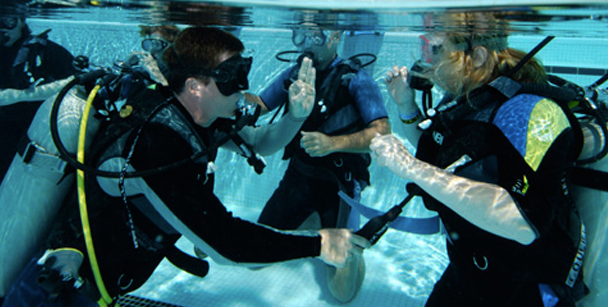
Then, your instructor will take the group within a pool, or shallow water, that you could stand in. Your instructor should discuss the skill which you’re going to perform, then you’ll go under the water together. Your instructor should first perform the skill, then ask every individual to conduct the skill.

Lastly, your instructor, in most instances, will take your group from the area of teaching, out to the region where they could take you on the underwater tour, showing you an entirely new world. For many, it’ll be a dream come true, and surely one that you’ll recall for a lifetime.

Some other learnings:

  • Learn what wearing scuba equipment feels like and how easy it is to move around underwater while wearing it
  • Find out what it’s like to breathe underwater and learn whether you can be comfortable there
  • Learn some basic skills and safety rules that will carry over to your full scuba certification course when you take the next step

Suunto Movescount & Scuba Diving

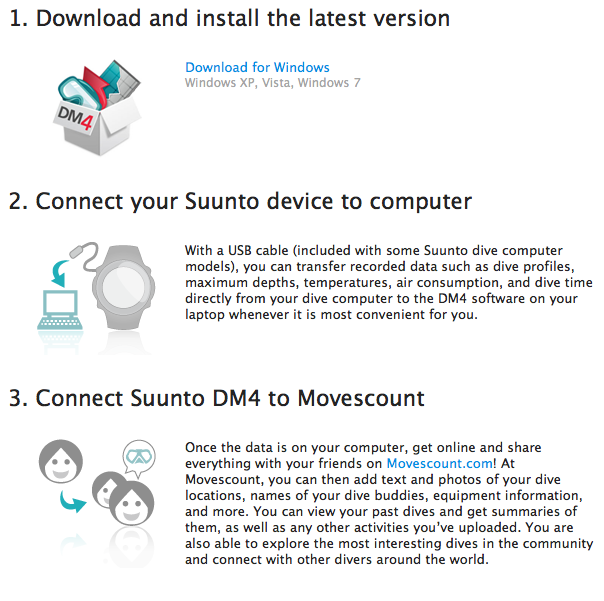
New to the diving community is the revolutionary Suunto Movescount, a user friendly tool to share all of your sporting activities with the world. Mainly this community has been used for runners and bikers to share and record their times, as well as gain likes and achievements through the website.

Suunto has decided that they should give divers an equal opportunity to share their exciting dive adventures. Movescount is a great visual tool for you to gain instant satisfaction from posting your dives to the world and sharing them with other divers. With Movescount you can also log your own personal achievements without sharing with others if you’re feeling a little anti-social, or just want to surprise the world at a later date!


Scuba diving has been looking for a tool like this, and with Suunto being one of the leading suppliers of dive equipment it only seems fitting that they would have the tools to make this happen. The website has a nice interface, almost “Facebook like”, giving you the ability to add fans, follow athletes, join groups and customize your own profile. A digital logbook if you will, with the ability to access from anywhere at anytime. This is a also a great tool for finding new dive buddies and connecting with people that you have met through the site. So bringing your laptop on vacation can now be mixed with your dive computer to record even more information about your awesome dives, and to record your bottom time accurately. This is not ONLY a tool to record your scuba diving activity, it has almost every sport you can think of, and from martial arts to badminton you can record ALL of your sporting activities.

Every good technology company knows, if you make a web interface for your industry, you should most definitely make a tool to use it on the fly! Like the new Suunto D6i, which allows you to easily upload and store all of your dive information directly from your laptop to Movescount.com. The watch itself is not different in any way from the D6, adding an “i” has only given it the ability to transfer directly to the website without any data having to be input by the user. The Suunto D6 is a great wrist computer that could easily pull off being an expensive wrist watch. When I travel and teach scuba diving my D4 never leaves my wrist, maybe it is time for me to upgrade to the D6i and start tracking my moves! This technology is new, and will begin to be a very exciting craze of sharing your healthy movements to your friends and newly acquired fans.

You can take a tour of Suunto Movescount by Clicking Here

Check out www.scubadiverlife.com to learn all about diving if you aren’t a scuba diver already, if you are; check us out and then head over to www.movescount.com and sign up for your account!

Saturday, July 2, 2011

Sea Shepard Cause

Please join the following Cause. These guys are called pirates but without them, the sea's/oceans are a free for all slaughter house, the marine life can't fight or talk for themselves, so please help out.


About

Sea Shepherd is a direct-action conservation group lead by Captain Paul Watson, a man whom author Farley Mowat calls "the world's most aggressive, most determined, most active and most effective defender of wildlife."

Join the official facebook page!
http://www.facebook.com/seashepherdco...

Goto the website. http://www.seashepherd.org/

Tell your friends.

Affiliated With

SEA SHEPHERD CONSERVATION SOCIETY

Donations Go To…

SEA SHEPHERD CONSERVATION SOCIETY
A 501(c)(3) nonprofit

Positions

  1. Defend
  2. Conserve
  3. Protect
A One Dollar from everyone who visits, will make a load of difference. Tell your friends as well. I'm sure you can spend a dollar, or have a look at there shop and purchase something cool, which also is a donation.

Wednesday, June 15, 2011

Deep Diving

As new divers, the seemingly arbitrary 20m depth restriction seems kind of foolish; after all, you’ve got your tables right? You just picked up that sweet computer from the shop that’s rated to 100m, so why can’t you go there? Well, to be frank, while deep diving is really an extension of fundamental skills you’ve learned as an Open Water Diver (or equivalent), there are a few things that set it apart and so additional training and familiarization is recommended before you charge down to 40m! The keys for safe deep diving are redundancy, equipment and situational awareness. Deep dives are different from regular, shallower dives because the environment can change quite a bit on the way down. Where the first 10m of a dive might be decent for vis and light, it might be near night diving conditions deeper. Absorption and turbidity eat away at the colours you can see, and your air supply dwindles faster. In addition to all that, narcosis effects can become more pronounced as well, adding an element of risk all its own to the dive.


Ensure to check your Depth

Wreck Diving does get deep


Safety Stops are a must

If you’re planning a deep dive, plan for all reasonable contingencies. Use redundant equipment for vital things like your depth gauge (probably the most important redundancy). Carry at least one dive light, but a secondary is never a bad plan. Talk to local divers and find out the conditions that you might be facing when you get to the bottom. If it’s a wall dive, watch your depth gauge(s) like a hawk! Some computers can be set for deep stops, so this is a good option as well. Situational awareness is a trait that good divers seek to develop as much as possible over their diving careers. In a deep dive, it’s as important as it would be on a night or wreck dive. Paying attention to your depth, watching your dive buddy and yourself for narcosis and keeping track of your air are the most key things to watch. And finally, brush up on your certifying agencies emergency decompression stop rules and write them on your slate so you don’t forget. You’re already increasing your risk of DCI, so there’s no sense increasing it further by blowing your tables and not taking the needed stop. Safety stops aren’t optional with deep dives!

Planning and conducting deep dives is a big part of diving for me and many other people, particularly the Tec set. While you are able to go to whatever depth you want, it’s good to get the extra training (and master Dalton’s Law) before you just plunge in. 40m is a long way from the surface and a safe dive is a good dive!